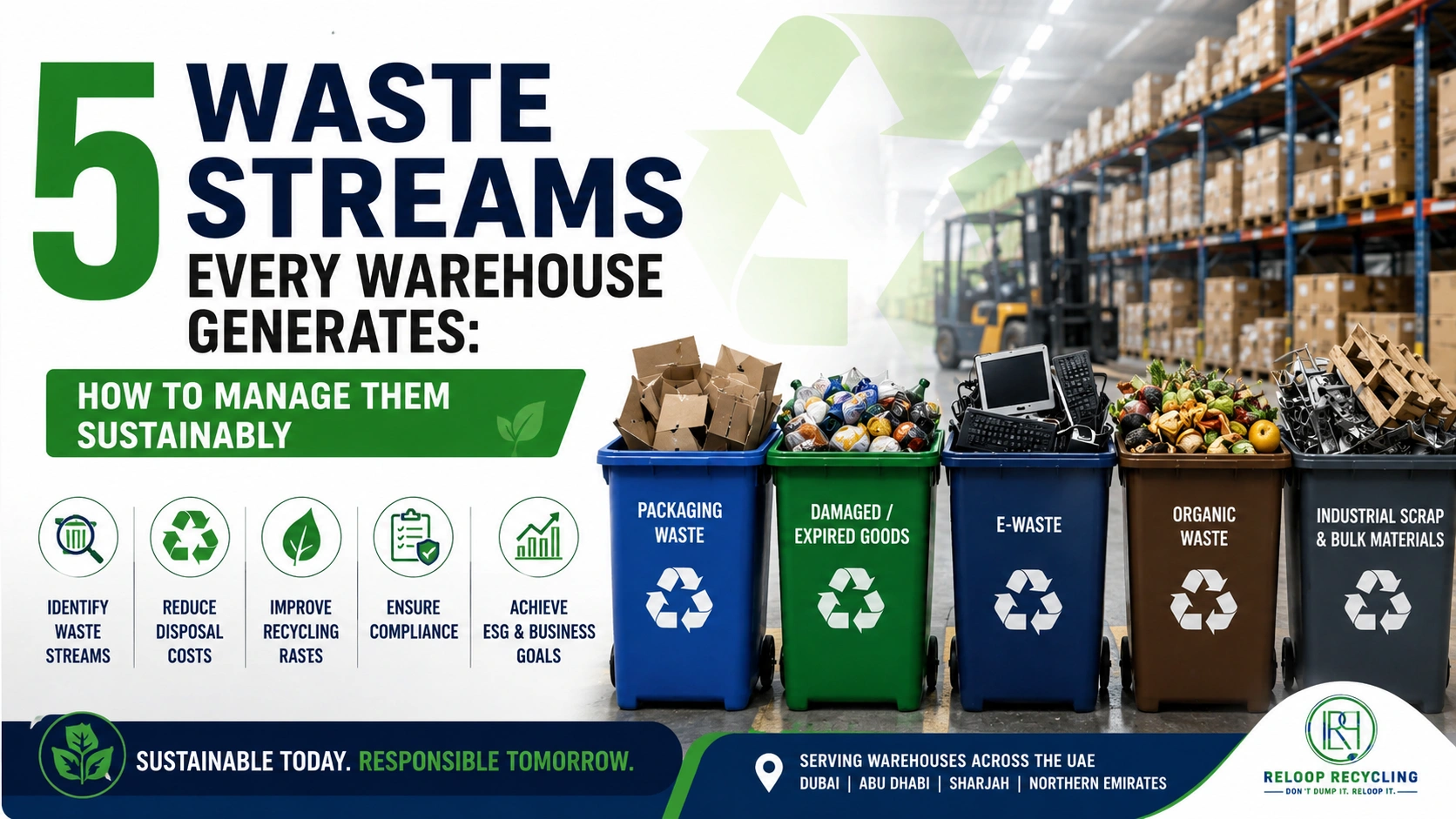
Modern warehouses are fast-paced hubs where receiving, storing, and shipping activities occur continuously. However, this high level of activity also yields a significant volume and variety of waste. When these different materials are combined indiscriminately, disposal expenses can rise, recycling rates drop, and regulatory compliance becomes more complex to maintain.
Recognizing and separating the five primary waste streams generated in warehouse environments is a practical step toward improving operational efficiency and environmental responsibility.
1. Packaging Waste
Warehouses process a substantial volume of packaging, including cardboard, paper cartons, plastic shrink wrap, and metal bands. Because packaging often makes up the largest percentage of warehouse waste, keeping these materials separate is important to preserve their recycling value.
Management strategies:
- Establish separate sorting bins for cardboard, plastics, and metals.
- Keep storage areas dry to prevent material degradation.
- Utilize balers or compactors to minimize the volume of loose materials.
- Coordinate regular collection schedules with recycling partners.
2. Unsellable, Damaged, or Expired Inventory
Products that are damaged, expired, or rejected represent a challenging waste category. These items frequently consist of combined materials, such as plastics, metals, and textiles, which complicates the disposal process.
Management strategies:
- Dismantle products to isolate recyclable parts from non-recyclable components when feasible.
- Work with licensed waste management providers to ensure responsible disposal.
- Maintain clear documentation to verify compliant disposal practices.
3. Operational Electronic Waste (E-Waste)
Warehousing relies heavily on electronics, from barcode scanners and label printers to system cables and batteries. E-waste requires careful handling due to hazardous components and potential data security risks.
Management strategies:
- Designate a safe, dry storage area for e-waste away from standard trash.
- Ensure that any stored data is securely wiped or destroyed before disposal.
- Partner with certified e-waste processors.
- Keep reliable records of electronics disposal for internal and external audits.
4. Breakroom and Organic Waste
Food scraps, cafeteria waste, and single-use food packaging are typical in staff areas. If left unmanaged, organic waste can contaminate dry recyclables and contribute to landfill emissions.
Management strategies:
- Provide clearly marked organic waste bins in dining and break areas.
- Educate staff on keeping food waste separate from packaging.
- Explore composting options or local organic waste diversion programs.
5. Bulky Materials and Industrial Scrap
Large items like wooden pallets, scrap metal, and industrial offcuts take up significant space. While bulky, these materials often have a high recovery or reuse value if sorted correctly.
Management strategies:
- Allocate specific storage zones for oversized items.
- Separate materials by type, such as wood, metal, or heavy plastics.
- Establish periodic bulk removal schedules.
- Identify opportunities to repair and reuse pallets or other sturdy items.
Why Structured Waste Management Matters
Implementing a structured waste separation plan offers several practical advantages for warehouses, including:
- Lowered waste disposal fees: Separating recyclable materials often reduces overall landfill costs.
- Smoother facility workflows: Cleared aisles and designated waste zones reduce clutter.
- A safer working environment: Organized storage of bulky waste and e-waste reduces tripping and fire hazards.
- Stronger alignment with corporate ESG targets: Structured tracking helps facilities meet environmental, social, and governance goals.
Supporting UAE Warehouses: Reloop Recycling FZE Solutions
Managing diverse waste streams can be complex. In the UAE, Reloop Recycling FZE Solutions works alongside warehouses and industrial operations to design and execute organized waste management programs.
Their services assist facilities through:
- Conducting detailed waste assessments to identify key material streams.
- Setting up effective on-site segregation plans.
- Providing certified recycling services for diverse waste categories.
- Managing scheduled transport and logistics.
- Supplying documentation to support local compliance standards.
Conclusion
Viewing waste not as a single operational challenge, but as five distinct resource streams, allows warehouse managers to improve resource recovery. With structured processes and reliable collaboration, waste management can transition from an administrative burden into an organized, practical system.

Raju Lajwani
 Connect on LinkedIn