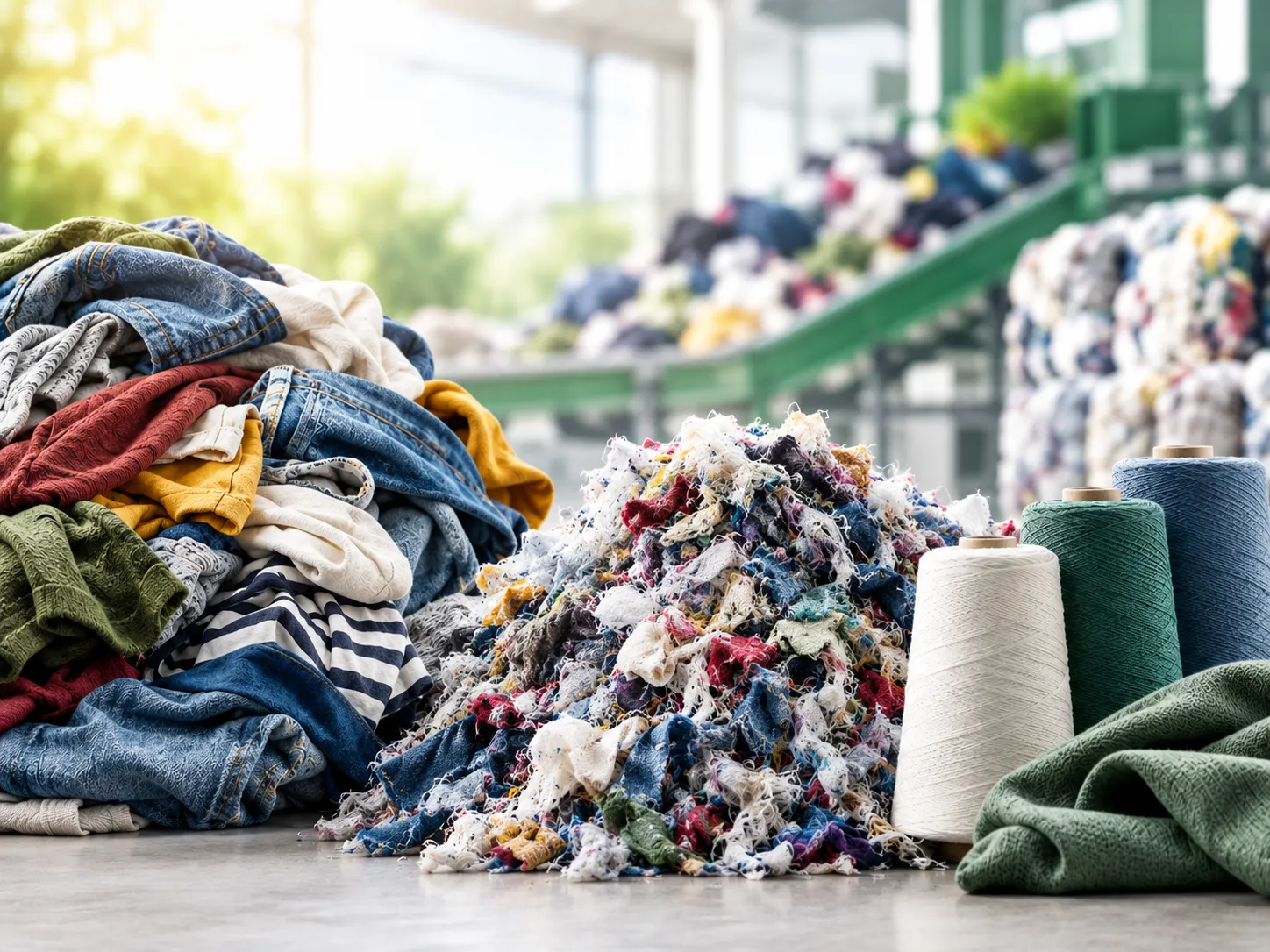
Businesses generate a surprising amount of textile waste.
Uniforms get replaced. Workwear becomes damaged. Factories produce fabric offcuts. Hotels change staff clothing. Retail businesses clear old stock. Sometimes these materials are still in good condition. Sometimes they are worn out and no longer useful.
The easy option is to throw everything away.
But textile waste does not always need to end up in landfill.
Textile recycling gives businesses another way to manage old uniforms, workwear and fabric waste. Depending on the material and its condition, textiles can be sorted and sent for recycling or other forms of recovery.
For businesses in the UAE, this can also be part of a more responsible waste management strategy.
What Is Textile Recycling?
Textile recycling is the process of collecting and processing unwanted textile materials so they can be recovered for another use where possible.
This can include clothing, uniforms, workwear, fabric offcuts and other textile materials.
The exact recycling process depends on the type of textile.
For example, cotton and polyester do not behave in the same way during recycling. A clean production offcut may also be easier to process than a mixed textile that contains several different materials.
This is why proper sorting is important.
The first step is not simply putting old uniforms into a recycling bin. Businesses need to understand what material they have and what condition it is in.
A professional recycling company can assess the material and determine the most suitable route.
Why Should Businesses Recycle Textile Waste?
Textile waste is often treated as an ordinary waste problem.
For businesses it can become much bigger than that.
A company may have hundreds or even thousands of uniforms after a contract ends or a new uniform is introduced. A factory can generate fabric offcuts every day. Hotels and other large organisations may regularly replace workwear.
Sending all of this material to general waste can mean losing an opportunity to recover useful resources.
Textile recycling can help businesses:
- Reduce the amount of textile waste going to landfill
- Recover materials where possible
- Manage obsolete uniforms more responsibly
- Improve waste segregation
- Support internal sustainability targets
- Build better waste management practices
- Reduce the amount of reusable material treated as general waste
There is also a practical benefit.
When textile waste is separated from general waste it becomes easier to identify what can be recycled or recovered.
What Types of Textile Waste Can Businesses Recycle?
Not every textile is the same.
The type of material and its condition will affect what happens to it after collection.
Common examples of business textile waste include:
Old uniforms
- Companies often replace uniforms when their branding changes or when a new design is introduced.
- The old uniforms may still be in good physical condition but are no longer suitable for employees.
- Instead of sending them straight to general waste, businesses can explore textile recycling options.
Workwear
- Industrial and commercial businesses can generate large amounts of workwear waste.
- This may include shirts, trousers, jackets and other fabric-based clothing.
- Workwear can contain different materials and may have additional components such as zips, buttons and reflective elements. These factors can affect how it is processed.
Fabric offcuts
- Manufacturing businesses can generate fabric offcuts during production.
- Individually these pieces may be small. Over time they can add up to a significant amount of waste.
- Keeping these materials separate can make collection and recycling easier.
Surplus fabric stock
- Sometimes fabric is left over after a project or production run.
- It may no longer be required by the business but can still have material value.
Damaged textiles
- Textiles that are stained or damaged may not be suitable for reuse. Depending on the material they may still have a potential recycling or recovery route.
- This is why businesses should not assume that damaged textiles automatically belong in general waste.
What Happens to Old Uniforms?

One of the most common questions businesses ask is what happens to their old uniforms after collection.
The answer depends on the material.
First the uniforms can be collected and assessed. They may then be sorted based on their material type and condition.
Some textiles may be suitable for recycling. Others may have a different recovery route.
The important point is that the recycling process starts with understanding the material.
For this reason businesses should provide as much information as possible when arranging textile waste collection.
Tell the recycling company what the material is. Explain where it came from and roughly how much there is.
If the uniforms have branding or company identification this should also be mentioned.
Can Branded Uniforms Be Recycled?
Yes. Branded uniforms can be considered for textile recycling. However, businesses often have an additional concern. They may not want old uniforms with company logos to be reused.
This is especially important when uniforms carry:
- Company logos
- Employee names
- Brand information
- Security information
- Department identification
- Customer-facing branding
If the branding needs to be made unusable, discuss this before collection.
Do not assume that standard textile recycling automatically means certified destruction of the branding.
A responsible recycling provider should clearly explain what they can offer.
At Reloop Recycling, we recommend discussing any branding or identification requirements before the job begins. This allows the material and the required handling process to be reviewed properly.
How Does Textile Recycling Work?
The recycling process can vary depending on the waste.
A typical business textile recycling process starts with collection.
1. Collection
Textile waste is collected from the business location.
For larger quantities the collection can be planned around the company’s waste generation schedule.
Keeping textile waste separate before collection can make the process easier.
2. Sorting
The collected material is checked and sorted.
Different textile materials may require different processing methods.
The condition of the material also matters.
Clean and separated textiles are generally easier to assess than mixed waste.
3. Processing
Suitable materials are sent through an appropriate recycling or recovery route.
The process can vary based on the fibre and the type of textile.
Some textiles can be mechanically processed into fibres or other materials. Other materials may require a different treatment.
The goal is to recover value from the material where practical.
4. Recovery
Once processed, recovered material may be used in other applications depending on its quality and the recycling route.
This is one of the key ideas behind the circular economy.
Instead of treating every unwanted product as waste, businesses look for ways to keep materials in use for longer.
Textile Recycling vs Textile Reuse
Recycling and reuse are not the same thing.
Reuse means an item is used again in its existing form or with relatively little processing.
Recycling means the material is processed so it can become part of another product or material stream.
For example an old uniform that is still suitable for its original purpose may have a reuse option.
A damaged uniform that is no longer suitable for wearing may instead be considered for recycling or recovery.
The right route depends on the condition and composition of the material.
Businesses should therefore avoid making assumptions about what happens to their textile waste. The material should be assessed first.
What About Textile Offcuts?
Fabric offcuts are an important source of textile waste for manufacturers.
They are created during cutting and production. Some businesses produce them every day.
The problem is that small pieces can quickly accumulate.
A factory that produces only a small amount of offcut waste each day can still generate a substantial volume over a month or a year.
One of the simplest improvements is to separate textile offcuts from general waste at the point where they are produced.
This makes it easier to collect them and identify their material type.
It also reduces the chance of recyclable material becoming contaminated with food waste or other general rubbish.
How Can a Business Prepare Textile Waste for Recycling?
You do not need to create a complicated system.
Start with basic segregation.
Keep textile waste separate from general waste wherever possible.
Then identify the main types of material you have.
For example:
Stream 1: Old uniforms
Stream 2: Fabric offcuts
Stream 3: Surplus fabric
Stream 4: Damaged textiles
You can also keep heavily contaminated material separate.
Before arranging collection take a few photographs of the material. Estimate the quantity and explain what it is.
If you have branded uniforms tell the recycling provider about the branding before collection.
This gives everyone a clearer understanding of the job.
Textile Waste Management for Businesses in the UAE
Businesses across the UAE generate textile waste from many different activities.
Hotels replace staff uniforms.
Construction companies use workwear.
Factories produce fabric offcuts.
Retail businesses clear old stock.
Corporate organisations update uniforms when their branding changes.
All of these situations can create textile waste.
A proper textile waste management system helps businesses deal with this material in a more organised way.
Instead of putting textiles into general waste bins, businesses can separate them and arrange collection through an appropriate recycling provider.
This approach can be especially useful for companies with regular textile waste generation.
Common Mistakes Businesses Make With Textile Waste
Putting textiles in general waste
This is probably the most common issue.
Once textiles are mixed with other waste they can become harder to recover.
Mixing all materials together
Different textiles can have different recycling requirements.
Keeping materials separated where practical makes assessment easier.
Assuming every textile can be recycled
Not every textile has the same recycling route.
Material composition, condition and contamination all matter.
Ignoring branding on uniforms
Businesses should discuss branding requirements before sending uniforms for recycling.
If logos or identification need to be made unusable, this should be agreed in advance.
Waiting until the waste becomes a problem
Textile waste is easier to manage when a collection process is planned.
Businesses with regular textile waste can consider scheduled collections rather than waiting until storage becomes difficult.
How Reloop Recycling Can Help
At Reloop Recycling we help businesses manage unwanted textile materials through collection and responsible recycling solutions.
Our service can support businesses with old uniforms, workwear, fabric offcuts, surplus textile stock and other business-generated textile waste.
We start by understanding what material you have.
From there we can advise on the appropriate collection and processing approach.
Our focus is straightforward:
Collect the waste. Assess the material. Recover what can be recovered. Keep useful materials away from landfill where possible.
If you have branded uniforms or specific requirements around company identification, tell us before collection. We can review the requirement and confirm what we can commit to for the particular material.
We do not make blanket claims about certified destruction unless a specific certified destruction process has been agreed.
A More Responsible Approach to Textile Waste
Textile waste is easy to overlook.
A few old uniforms here. Some fabric offcuts there. A box of obsolete workwear sitting in a storeroom.
Over time it can become a significant waste stream.
The good news is that businesses have options.
By separating textile waste from general waste and working with a suitable recycling provider, companies can take a more responsible approach to unwanted textiles.
Textile recycling is not about claiming that every piece of fabric can be recycled.
It is about looking at the material properly and finding the most appropriate route for it.
For businesses in the UAE, that can be a practical step towards better waste management and a more circular approach to materials.

Raju Lajwani
 Connect on LinkedIn