A comprehensive guide to responsible electronics recycling, environmental protection, data security and sustainable business practices.
Imagine handing over your old laptop, desktop computer, mobile phone or other electronic equipment to a recycling company. You expect the device to be handled responsibly. But how can you be certain that your personal data will not be exposed, hazardous materials will not be improperly processed, and recyclable components will not end up in an unsafe disposal site?
This is where R2v3 Certification, also known as the Responsible Recycling Standard, becomes important.
As electronic waste continues to grow worldwide, responsible recycling is no longer just about collecting discarded electronic products and extracting valuable materials. It involves a complete system of environmental management, worker safety, data protection, material tracking, reuse and responsible recycling.
R2v3 provides a structured framework for electronics reuse and recycling facilities to demonstrate that they follow recognised practices for managing used electronic equipment responsibly. It helps businesses, customers and other stakeholders identify facilities that have undergone independent audits against defined requirements.
What Is R2v3 Certification?
R2v3 stands for Responsible Recycling Version 3, the third version of the R2 Standard, developed for the electronics reuse and recycling industry. It is administered by SERI (Sustainable Electronics Recycling International).
R2 is a global standard designed to recognise electronics recycling and reuse facilities that follow environmentally sound management practices. Its objective is to ensure that used electronic products are managed in a way that protects the environment, safeguards workers and communities, secures sensitive information and preserves valuable natural resources. SERI+1
Unlike a general business registration or a simple environmental declaration, R2v3 certification involves an independent assessment of a facility’s operations against specific requirements. The certification applies to the facility and the processes included in its approved certification scope. This means that customers can understand which activities have actually been audited rather than assuming that every possible recycling activity is covered.
Who needs R2v3 certification?
It is particularly relevant to businesses involved in:
- Electronic waste collection and processing.
- IT asset disposition (ITAD).
- Electronics refurbishment and resale.
- Electronic device testing and repair.
- Dismantling and material recovery.
- Secure data destruction and sanitisation.
- Management of downstream recycling partners.
What Does the R2v3 Responsible Recycling Standard Cover?
One of the most important features of R2v3 is its structured approach. It divides requirements into two main categories: Core Requirements and Process Requirements.
A. Core Requirements
These requirements apply to every R2-certified facility. They establish the foundation for responsible electronics management, covering environmental protection, worker safety, legal compliance, material tracking, data security and transportation.
B. Process Requirements
These requirements apply according to the specialised activities a facility performs. For example, a facility carrying out logical data sanitisation or testing and repairing electronic devices must meet the relevant additional requirements. This approach makes the certification more specific to the actual operations of each facility. SERI+2
10 Core Requirements of R2v3
The strength of R2v3 lies in its detailed requirements. These are not simply recommendations; they establish controls that certified facilities must implement and demonstrate through documented evidence.
| Core requirement | What it means in practice |
|---|---|
| 1. Scope | Clearly identify the facility’s activities and processes covered by certification. |
| 2. Hierarchy of Responsible Management Strategies | Prioritise reuse of complete devices, then components, and finally responsible material recovery. |
| 3. Environmental, Health & Safety Management System | Maintain a structured system to control environmental, occupational health and safety risks. |
| 4. Legal and Other Requirements | Identify and comply with applicable laws, regulations and customer requirements. |
| 5. Tracking Throughput | Maintain records of incoming equipment, internal processing and outgoing materials. |
| 6. Sorting, Categorisation and Processing | Assess and categorise equipment to determine the correct processing pathway. |
| 7. Data Security | Protect data-bearing devices and ensure effective data sanitisation or physical destruction. |
| 8. Focus Materials | Identify and properly manage materials requiring special controls because of their environmental or processing risks. |
| 9. Facility Requirements | Maintain safe storage and processing conditions, assess risks and plan for unexpected facility closure. |
| 10. Transport | Ensure safe, secure and legally compliant transportation of electronic equipment and materials. |
These ten requirements collectively establish accountability from the moment equipment enters a certified facility until it reaches an appropriate reuse, recycling or final processing destination. sustainableelectronics.org
Understanding some of the most important requirements
Reuse First – A major principle of R2v3
One of the most valuable principles of R2v3 is the hierarchy of responsible management. Instead of immediately dismantling every discarded electronic product, facilities must evaluate whether equipment or its components can be reused. For example, a working laptop with minor cosmetic damage may be suitable for refurbishment and resale. If the complete device cannot be reused, functional components may still have value. Only when reuse is no longer viable should the focus shift towards responsible material recovery. This approach supports a circular economy by extending the useful life of electronic products and reducing the demand for virgin raw materials.
Data Security – Protecting confidential information
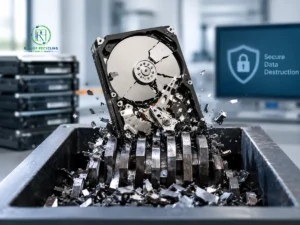
Old computers, laptops, smartphones, servers and storage devices may contain personal information, business records, financial data, customer details and confidential corporate information. Simply deleting files or formatting a hard drive does not necessarily guarantee secure data removal. R2v3 requires facilities to protect data-bearing devices while under their control and to ensure effective sanitisation or appropriate physical destruction. Facilities performing enhanced logical data sanitisation must meet the applicable Appendix B requirements. This is particularly important for banks, hospitals, IT companies, government organisations and businesses disposing of large volumes of electronic equipment.
Focus Materials – Managing hazardous and sensitive materials
Electronic equipment contains valuable materials, but some components require additional environmental controls. R2v3 identifies Focus Materials that need special handling and processing because of the risks associated with their composition or recovery processes. Examples include batteries, circuit boards, mercury, CRT glass and polychlorinated biphenyls (PCBs). Certified facilities must establish appropriate management plans and verify the responsible handling of these materials throughout the downstream recycling chain.
Tracking and Traceability – Knowing where materials go
Responsible recycling does not end when electronic waste leaves the facility. A certified organisation must maintain records of incoming equipment, materials generated during processing and outgoing streams. This helps establish accountability and makes it possible to verify how materials are managed. If a facility sends certain materials to another recycling company, the downstream relationship must be properly qualified and managed under the applicable requirements.
How Does an R2v3 Certified Company Work? Understanding the Working Procedure
To understand the practical importance of R2v3, consider what happens when a company receives a batch of discarded computers and electronic equipment from a corporate customer. A responsible recycling process involves several controlled stages rather than simply collecting, dismantling and selling scrap.
TYPICAL RESPONSIBLE ELECTRONICS PROCESSING WORKFLOW
1. Collection and receiving
Equipment is received, identified and recorded.
2. Inventory and tracking
Items and material streams are documented and traceable.
3. Inspection and categorisation
Equipment is assessed for condition, functionality and reuse potential.
4A. Reuse and repair
Suitable equipment is tested, repaired or refurbished under applicable requirements.
4B. Material recovery
Non-reusable equipment is directed to appropriate dismantling and recovery processes.
5. Data sanitisation and material management
Data-bearing devices and sensitive material streams receive the required controls.
6. Approved downstream processing
Materials requiring specialist treatment are transferred through qualified downstream channels.
7. Documentation and final accountability
Records demonstrate the handling and destination of equipment and material streams.
Illustrative workflow: the actual sequence depends on the equipment, processing activities and certified facility scope.
Step 1: Collection and receiving: The process begins when used electronic equipment arrives at the facility. Items are received, identified and recorded. The organisation establishes the required records to maintain control over the equipment and materials entering its operations.
Step 2: Inventory and tracking: Each incoming material stream is documented according to the facility’s procedures. This allows the organisation to track the equipment as it moves through different processing stages. Proper tracking is essential because electronic waste may contain reusable products, valuable components and materials requiring special treatment.
Step 3: Inspection and categorisation: Equipment is inspected and evaluated to determine its physical condition, functionality and potential for reuse. Devices are categorised according to the applicable R2 Equipment Categorization (REC) requirements. This evaluation helps determine whether a product should be directed towards reuse, further testing, repair, dismantling or material recovery.
Step 4: Reuse, refurbishment or dismantling: Functional devices may be directed towards appropriate reuse pathways. Equipment requiring testing or repair must be handled under the applicable process requirements. Products that cannot be reused are directed towards suitable dismantling and recovery processes.
Step 5: Data sanitisation and secure handling: Data-bearing equipment is protected throughout the facility’s control. Depending on the method and scope, data may be sanitised through appropriate logical processes or destroyed through approved physical methods. The facility must maintain the necessary security controls and evidence.
Step 6: Material recovery and downstream management: Components and materials that cannot be reused are separated and sent through suitable recovery channels. If specialist processing is required, the facility must ensure that downstream vendors are appropriately qualified and managed under the relevant requirements.
Step 7: Final documentation and traceability: Records are maintained to demonstrate how materials were processed and where they were sent. This creates a transparent chain of responsibility and provides evidence for audits, customer reporting and operational control.
This is what distinguishes a structured responsible recycling system from an informal collection-and-disposal operation.
What Are the Benefits of Being an R2v3 Certified Company?
R2v3 certification can create significant operational, environmental and commercial advantages for electronics recycling and IT asset disposition businesses. Its value extends beyond displaying a certification logo on a website or company profile.
1. Improved Environmental Protection
A certified facility follows defined requirements for identifying and managing environmental risks associated with electronics reuse and recycling. Proper handling of Focus Materials, responsible processing and controlled downstream management help reduce the risk of environmental contamination.
2. Better Data Security and Customer Confidence
Data security is one of the most important concerns when organisations dispose of computers, servers, mobile devices and storage media. R2v3 establishes controls for protecting data-bearing equipment and ensuring appropriate sanitisation or destruction. This can help businesses strengthen their IT asset disposal practices and build confidence among customers.
3. Improved Worker Health and Safety
Electronics recycling involves physical, chemical and operational hazards. Workers may be exposed to sharp components, batteries, hazardous substances, dust and heavy equipment. R2v3 requires an Environmental, Health and Safety Management System, helping facilities establish structured risk assessment, training, operational controls and safer working conditions.
4. Greater Material Recovery and Resource Efficiency
The reuse-first hierarchy encourages facilities to recover maximum value from discarded electronics. Reusable devices and components can be directed towards further use, while non-reusable materials can enter appropriate recycling pathways. This helps preserve valuable resources and supports circular economy objectives.
5. Better Business Credibility
Independent certification gives customers a way to distinguish facilities that have been audited against the R2 Standard from organisations that simply claim to follow responsible recycling practices. It can strengthen credibility when dealing with corporate clients, institutional buyers and organisations that have sustainability and compliance requirements.
6. Improved Supply Chain Transparency
R2v3 places importance on identifying and managing downstream vendors. This is particularly valuable because one facility may not have the technology or capability to process every type of electronic material. Responsible downstream management helps maintain control beyond the immediate facility.
7. Support for Business Partnerships and Procurement
Many organisations evaluate environmental management, information security and supplier responsibility when selecting electronics recycling partners. R2v3 certification may help a facility demonstrate relevant capabilities during vendor assessments, tenders and corporate procurement processes. However, certification does not automatically guarantee a contract or replace a customer’s own supplier qualification requirements.
Why Is R2v3 Certification Important for Businesses?
Consider a company replacing 500 computers across its offices. These computers may contain confidential business information, customer records, employee details and valuable electronic components. If the company hands them over to an unreliable recycling provider, it may face several risks, including data exposure, improper disposal, environmental damage and a lack of documentation.
This is why choosing an R2v3-certified electronics recycling partner can be important.
For corporate organisations: It provides an independently audited framework for responsible handling of retired IT assets, including data security, material tracking and downstream management.
For government and institutional organisations: It supports more structured electronics disposal and helps demonstrate responsible supplier selection.
For electronics manufacturers: It can support end-of-life product management, resource recovery and responsible supply chain practices.
For recycling companies: It creates a framework for improving internal processes, managing operational risks and demonstrating responsible business practices.
For customers and consumers: It provides greater confidence that their used electronics are being handled by a facility whose relevant operations have been independently audited against a recognised standard.
R2v3 is therefore not simply an environmental credential. It connects environmental responsibility, information security, occupational safety and operational accountability.
What Are the Process Requirements and Appendices of R2v3?
An important aspect of R2v3 is that not every certified facility performs the same activities. A company specialising in data destruction may have different operational requirements from a company specialising in electronics repair or material recovery.
To address this, R2v3 includes specialised Process Requirements through its appendices. The applicable requirements depend on the actual activities performed by the facility.
One particularly important example is Appendix A – Downstream Recycling Chain. It establishes requirements for qualifying and managing downstream vendors that receive controlled materials from an R2 facility. Other specialised requirements address activities such as data sanitisation and testing and repair. SERI+1
| Process requirement | Main area |
|---|---|
| Appendix A | Downstream Recycling Chain |
| Appendix B | Data Sanitisation |
| Appendix C | Test and Repair |
| Appendix D–G | Other specialised processing activities, depending on the facility’s operations |
The complete applicability of each appendix should be checked against SERI’s current R2v3 documentation. A facility must be certified for the applicable specialised processes it performs; it cannot assume that certification for one activity automatically covers another.
How Does a Company Obtain R2v3 Certification?
Achieving R2v3 certification requires preparation, implementation, documentation and independent assessment. It is not a certification that a company can obtain simply by submitting an application or paying a registration fee.
The general certification journey involves the following stages:
1. Understand the R2v3 Standard: The organisation first needs to understand the Core Requirements and identify which Process Requirements apply to its activities. This includes reviewing its electronics handling, data security, environmental controls, worker safety and downstream operations.
2. Define the Certification Scope: The company identifies the facility, activities, equipment categories and processes that will be included in certification. Defining the correct scope is essential because the certificate must accurately reflect the operations being audited.
3. Develop and Implement Management Systems: The facility establishes the required procedures, policies, operational controls, documentation, training and monitoring systems. It must also maintain the required certified Environmental, Health and Safety Management System.
4. Evaluate Downstream Vendors: If materials are transferred to external recyclers or specialist processors, the facility must establish appropriate qualification, due diligence, monitoring and documentation procedures.
5. Conduct Internal Audits and Legal Compliance Reviews: Before external certification, the organisation evaluates its operations against applicable requirements, identifies gaps and implements corrective actions.
6. Undergo an Independent Certification Audit: The facility selects an authorised R2 Certification Body. Qualified auditors assess the facility’s operations, records, management systems, processes and evidence of compliance.
7. Correct Nonconformities: If the audit identifies nonconformities, the organisation must implement appropriate corrective actions and provide the required evidence for verification.
8. Certification Decision and Continued Compliance: Once the required audit and technical review processes are successfully completed, the Certification Body makes the certification decision. The company must continue to meet the requirements through ongoing monitoring, surveillance and recertification activities.
SERI administers the R2 programme, while authorised independent Certification Bodies conduct facility audits and make certification decisions. SERI+1
How Can Customers Verify Whether a Company Is R2v3 Certified?
A company displaying an R2 logo does not automatically mean that all its operations are covered by certification. Customers should verify the actual certification status and scope before selecting a recycling partner.
Here are some important checks:
- Check the certificate: Request a copy of the current R2v3 certificate.
- Verify the facility address: Confirm that the certificate covers the actual facility handling your equipment.
- Review the certification scope: Check which operations and specialised processes are included.
- Check certificate validity: Review the issue date, expiry date and current certification status.
- Verify the Certification Body: Ensure that the certificate has been issued by an authorised Certification Body.
- Understand downstream arrangements: Ask how materials requiring specialist treatment are managed.
- Request supporting documentation: Depending on your requirements, ask for data sanitisation records, collection documentation, processing records and material recovery reports.
Customers can also use SERI’s official directory to locate certified facilities and check relevant certification information.
R2v3 Certification vs. Simply Being an Electronics Recycler
There is a significant difference between collecting electronic waste and operating a facility that has demonstrated conformance with the R2 Standard.
| Ordinary electronics recycling operation | R2v3-certified facility |
|---|---|
| May focus mainly on collection and disposal | Follows audited requirements within its certified scope |
| May have limited material tracking | Maintains required inbound, in-process and outbound records |
| Data handling practices may vary | Follows defined data security requirements |
| Downstream processes may have limited visibility | Manages downstream vendors under applicable requirements |
| Reuse may not be prioritised | Follows a reuse-first management hierarchy |
| Environmental and safety controls may vary | Maintains the required management systems and controls |
This comparison describes the difference in the standard’s requirements, not a claim that every non-certified recycler operates irresponsibly. Some non-certified businesses may also follow good practices, but they have not demonstrated conformity through the R2 certification programme.
R2v3 and the Circular Economy: How Does It Support Sustainable Development?
The circular economy focuses on keeping products, components and materials in use for as long as practically possible. Rather than following a traditional linear model of manufacturing, consumption and disposal, it encourages reuse, repair, refurbishment and recycling.
R2v3 supports this approach through its responsible management hierarchy. A discarded electronic device should not automatically be treated as waste. It should first be evaluated to determine whether the complete product can be reused. If that is not possible, functional components may still be recovered. Finally, materials that cannot be reused should be managed through appropriate recycling and recovery processes.
For example, an organisation replacing its old desktop computers may find that some machines are still functional, others require minor repairs, and a few are beyond recovery. Under a reuse-first approach, suitable devices can be prepared for further use, repairable devices can be restored where applicable, and non-reusable equipment can be dismantled for material recovery. This approach helps reduce unnecessary waste, extends product life and supports more efficient use of natural resources.
The broader significance is clear: responsible recycling is not just about managing what we throw away; it is about recovering the value we would otherwise lose.
What Should You Look for When Selecting an R2v3 Certified Recycling Partner?
If your organisation is planning to dispose of electronic assets, selecting the right recycling partner is an important business decision. Certification is an excellent starting point, but it should be considered alongside the facility’s actual capabilities and the requirements of your project.
Before finalising a recycling partner, consider asking the following questions:
- Is the facility’s R2v3 certificate currently valid?
- Does its certification scope cover the services you require?
- Does it provide secure data sanitisation or physical destruction?
- Can it provide appropriate data destruction documentation?
- How does it manage batteries, circuit boards and other Focus Materials?
- Are downstream recycling vendors properly qualified and monitored?
- Can it provide material tracking and processing reports?
- Does it have suitable equipment, trained personnel and safe processing infrastructure?
- Can it handle your required volume of electronic waste?
- Can it demonstrate how reusable equipment and recovered materials are managed?
These questions help organisations move beyond the certification label and understand the actual capabilities of their recycling partner.
Conclusion: Responsible Recycling Is a Commitment, Not Just a Certificate
As the volume of electronic waste increases, businesses can no longer treat end-of-life electronics as ordinary discarded materials. Computers, servers, mobile phones, batteries and other electronic products contain valuable resources, sensitive information and materials that require responsible management.
R2v3 provides a structured and independently audited framework for managing these challenges. Through its Core Requirements and applicable Process Requirements, it establishes expectations for environmental protection, worker health and safety, data security, reuse, material recovery, traceability and downstream vendor management.
For electronics recyclers, achieving certification represents a commitment to improving operational practices and demonstrating accountability. For businesses, it offers a valuable reference when selecting responsible IT asset disposition and electronics recycling partners. For the environment, it supports better resource utilisation and more responsible management of electronic products throughout their useful life and beyond.
The real value of responsible recycling is not measured by how much electronic waste a company collects. It is measured by how responsibly that waste is managed, how much value is recovered, how effectively data and people are protected, and how little harm is caused to the environment.
R2v3 is more than a certification milestone. It represents a commitment to making electronics reuse and recycling safer, more transparent and more sustainable.

Raju Lajwani
 Connect on LinkedIn