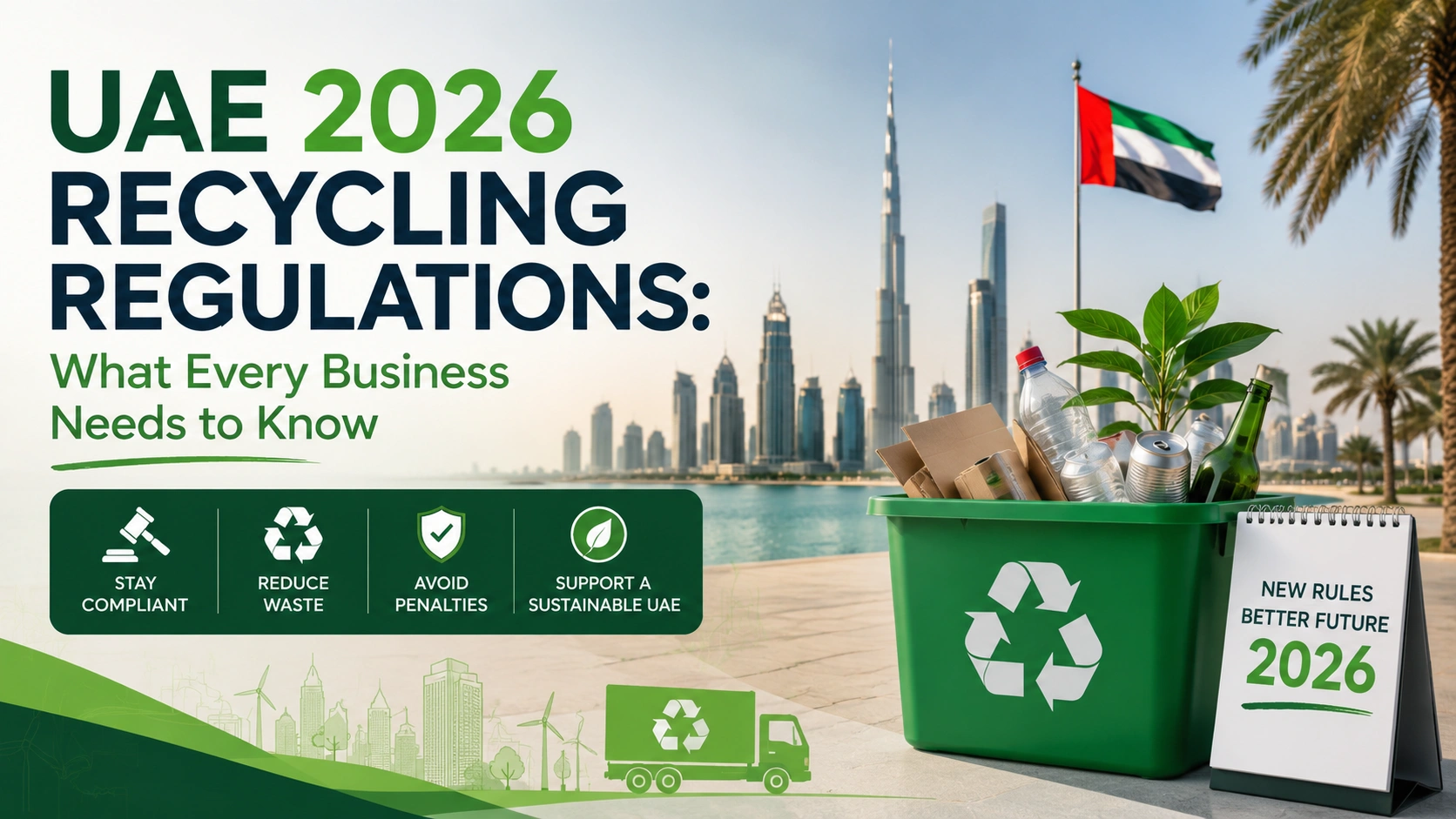
Quick answer: Starting January 1, 2026, the UAE will prohibit the import, production, and sale of most single-use plastic items — including cups, cutlery, plates, containers, and select packaging – while landfill diversion targets under initiatives like Dubai’s Zero Waste 2041 strategy make waste segregation and reporting mandatory for many businesses. Companies that audit their waste streams, segregate at source, and maintain traceable disposal records now will avoid disruption and strengthen their ESG position.
The United Arab Emirates is entering a decisive phase in its sustainability journey. With new recycling and waste management regulations taking effect in 2026, the rules governing how businesses produce, package, and dispose of materials are changing – and changing fast. For organizations across retail, hospitality, food and beverage, manufacturing, and logistics, this is no longer a matter of environmental goodwill. It is a matter of operational compliance.
At Reloop Recycling FZE, we work with UAE businesses every day to translate regulatory change into practical action. This guide outlines exactly what’s coming, what it means for your operations, and how to prepare before the deadlines arrive.
What Do the 2026 UAE Recycling Regulations Include?
Single-Use Plastic Ban
From 1 January 2026, businesses must replace many disposable plastic products with approved alternatives.
Waste Reporting & Diversion
Businesses must segregate waste, maintain recycling records, and support landfill diversion initiatives.
1. The Single-Use Plastic Ban
Effective January 1, 2026, the UAE will ban the import, manufacture, and sale of a wide range of single-use plastic products, including disposable cups, cutlery, plates, food containers, and specific packaging formats. This is the next phase of a rollout that has already removed single-use plastic bags, stirrers, and foam containers from circulation across the country.
What this means for your business: If your operations rely on plastic packaging, disposable service ware, or plastic-based consumables – particularly in retail, hospitality, catering, or F&B – you need to review your supply chain and switch to compliant alternatives before the ban takes effect. Waiting until the deadline risks stock write-offs, supply disruptions, and regulatory penalties.
2. Landfill Diversion and Waste Reporting Targets
Beyond the plastics ban, national and emirate-level strategies – most notably Dubai’s Zero Waste by 2041 roadmap — are pushing hard to divert waste away from landfill through recycling, recovery, and reuse. This shift brings mandatory waste segregation and, for many waste streams, formal reporting requirements.
What this means for your business: Segregating waste at the point of generation, keeping accurate records of what’s collected and recycled, and being able to demonstrate – not just claim – diversion from landfill will become baseline compliance expectations rather than optional best practice.
How Businesses Can Prepare: A Practical Compliance Checklist
Audit Your Waste Streams
Segregate at Source
Document Everything
Step 1: Audit Your Waste Streams
You cannot manage what you haven’t measured. A proper waste audit identifies exactly what your business generates, including:
- Rigid and soft plastics
- Packaging materials (cartons, wraps, films)
- Food and organic waste
- E-waste and batteries
- Textiles and uniforms
- Expired, damaged, or obsolete stock
A clear picture of your waste composition reveals recycling opportunities you may be missing and reduces the risk of misclassifying or mishandling – regulated materials.
Step 2: Segregate at Source
Recycling only works if materials arrive clean and correctly sorted. Set up dedicated collection points for recyclables versus non-recyclables, and train staff on what belongs where. Contamination remains one of the single biggest reasons recyclable material ends up in landfill anyway – so getting segregation right at the source is the highest-leverage step any business can take.
Step 3: Document Everything
As oversight tightens, traceability becomes essential. Businesses should maintain:
- Collection tickets and manifests
- Recycling and disposal certificates
- Weight and volume reports by waste stream
- Records for regulated or hazardous waste categories
This documentation does double duty: it proves regulatory compliance during audits, and it feeds directly into ESG disclosures and sustainability reporting.
How Reloop Recycling FZE Supports Your Compliance Journey
Reloop Recycling FZE partners with businesses across the UAE to make the shift to 2026-ready waste management straightforward and disruption-free.
Certified, Compliant Waste Handling Our processes align with UAE municipal and national waste management standards, giving your business a verified compliance trail for recycling, disposal, and material recovery.
Full-Spectrum Waste Coverage From plastics and packaging to e-waste, batteries, organics, and textiles, Reloop Recycling FZE provides dedicated recycling streams and safe, standards-based processing for every material category your business handles.
Audit-Ready Documentation Every collection is backed by traceable reporting – certificates, weight and volume data, and disposal records – structured for regulatory review and ESG reporting alike.
End-to-End Operational Support Our team supports you through waste audits, segregation setup and staff training, collection logistics, and ongoing processing – so compliance becomes part of your operations, not a disruption to them.
Frequently Asked Questions
When does the UAE single-use plastic ban take effect? The ban on importing, producing, and selling most single-use plastic items — including cups, cutlery, plates, and certain packaging – takes effect January 1, 2026.
Which businesses are most affected by the 2026 regulations? Retail, hospitality, food and beverage, and manufacturing businesses that rely on plastic packaging or disposable service ware face the most direct impact, though the landfill diversion and reporting requirements apply more broadly across sectors.
What is Dubai’s Zero Waste 2041 strategy? It is Dubai’s long-term roadmap to divert waste from landfill through recycling, recovery, and reuse, supported by mandatory segregation and reporting requirements for many waste streams.
How can a business prove recycling compliance? Through traceable documentation — collection tickets, recycling certificates, and weight/volume reports — that verify materials were recycled or recovered rather than sent to landfill.
How does Reloop Recycling FZE help businesses comply? Reloop Recycling FZE provides certified waste handling, full-spectrum recycling services across material types, audit-ready documentation, and end-to-end operational support, from waste audits to ongoing collection and processing.
The Bottom Line
The UAE’s 2026 recycling regulations mark a structural shift in how businesses are expected to manage waste — not a temporary compliance exercise. Organizations that act early will avoid last-minute disruption, reduce regulatory risk, and build a genuine sustainability track record rather than a reactive one.
Prepare Your Business for the 2026 Recycling Regulations
Stay ahead of changing regulations with Reloop Recycling FZE. We provide certified recycling solutions, comprehensive waste audits, and tailored compliance roadmaps to help your business meet 2026 UAE recycling requirements with confidence.
Book Your Free Waste Audit →
Raju Lajwani
 Connect on LinkedIn