Saudi Arabia is undergoing a significant transformation aimed at building a more prosperous, diversified, and sustainable future. At the centre of this transformation is Saudi Vision 2030, a national strategy launched in 2016 to strengthen the economy, improve quality of life, empower society, and promote sustainable development.
Vision 2030 represents a long-term commitment to creating new opportunities, improving public services, encouraging innovation, and protecting the Kingdom’s natural resources for future generations.
As cities expand, industries develop, and new communities emerge, sustainability is becoming increasingly important. Responsible resource management, environmental protection, efficient infrastructure, and waste reduction are essential to ensuring that economic growth is balanced with environmental responsibility.
Understanding Vision 2030 helps individuals, businesses, and communities recognize how their everyday decisions can contribute to the Kingdom’s long-term ambitions.
What Is Saudi Vision 2030?
Saudi Vision 2030 is a national development framework designed to diversify Saudi Arabia’s economy, reduce its dependence on oil revenues, strengthen social development, and improve the efficiency of government and public services.
The Vision is built around three main pillars:
A Vibrant Society
This pillar focuses on improving quality of life, promoting healthy lifestyles, preserving cultural heritage, strengthening communities, and creating attractive places to live, work, and visit. It also recognizes the importance of protecting the natural environment and improving access to social and cultural opportunities.
A Thriving Economy
This pillar aims to diversify economic activity, attract investment, support entrepreneurship, develop new industries, create employment opportunities, and increase private-sector participation. It encourages innovation and the development of competitive businesses that can contribute to long-term prosperity.
An Ambitious Nation
This pillar emphasizes effective governance, transparency, accountability, and efficient public services. It seeks to strengthen institutions and encourage collaboration between government entities, businesses, and communities to achieve national objectives.
Together, these pillars provide a comprehensive roadmap for economic progress, social well-being, and sustainable development across Saudi Arabia.
Why Does Saudi Arabia Need Vision 2030?
Every developing economy faces challenges as its population grows, industries expand, and demand for infrastructure and resources increases. Vision 2030 provides a framework for addressing these challenges while preparing the Kingdom for future opportunities.
Economic diversification
Diversifying the economy creates opportunities beyond traditional oil-related activities. Investment in tourism, technology, manufacturing, logistics, renewable energy, entertainment, and other sectors can broaden economic activity and support employment.
Environmental protection
Economic development must be balanced with the responsible use of natural resources. Protecting ecosystems, reducing pollution, improving resource efficiency, and encouraging sustainable practices are important for maintaining environmental quality.
Improved quality of life
Clean public spaces, reliable infrastructure, accessible services, and well-maintained residential and commercial environments contribute to healthier, more comfortable communities.
Efficient resource utilization
Water, energy, raw materials, and land are valuable resources. Using them efficiently helps reduce avoidable consumption, minimize waste, and support more sustainable patterns of development.
Innovation and global competitiveness
Encouraging innovation, developing skills, and adopting modern technologies can help Saudi Arabia strengthen its position as an international destination for investment, tourism, business, and sustainable development.
Vision 2030 brings these priorities together within a long-term national framework, helping align economic progress with the needs of society and the environment.
Vision 2030 and Environmental Sustainability
Environmental sustainability is an important part of Saudi Arabia’s long-term development ambitions. The Kingdom’s growing cities, expanding infrastructure, and increasing economic activity make responsible resource management essential.
The Saudi Green Initiative complements Vision 2030 through initiatives focused on reducing emissions, increasing vegetation, and protecting land and marine environments.
Environmental sustainability involves more than protecting natural landscapes. It also includes the way buildings are designed and operated, how materials are consumed, how waste is handled, and how efficiently businesses use energy and water.
Key areas of focus include:
- Reducing pollution and improving environmental quality.
- Protecting biodiversity and natural ecosystems.
- Improving energy and water efficiency.
- Encouraging recycling and responsible waste management.
- Promoting sustainable urban development.
- Supporting innovation in environmental technologies.
- Increasing awareness and participation in sustainability initiatives.
These priorities demonstrate that environmental responsibility is closely connected to economic resilience, public health, and quality of life.
Why Is Waste Management Important to Vision 2030?
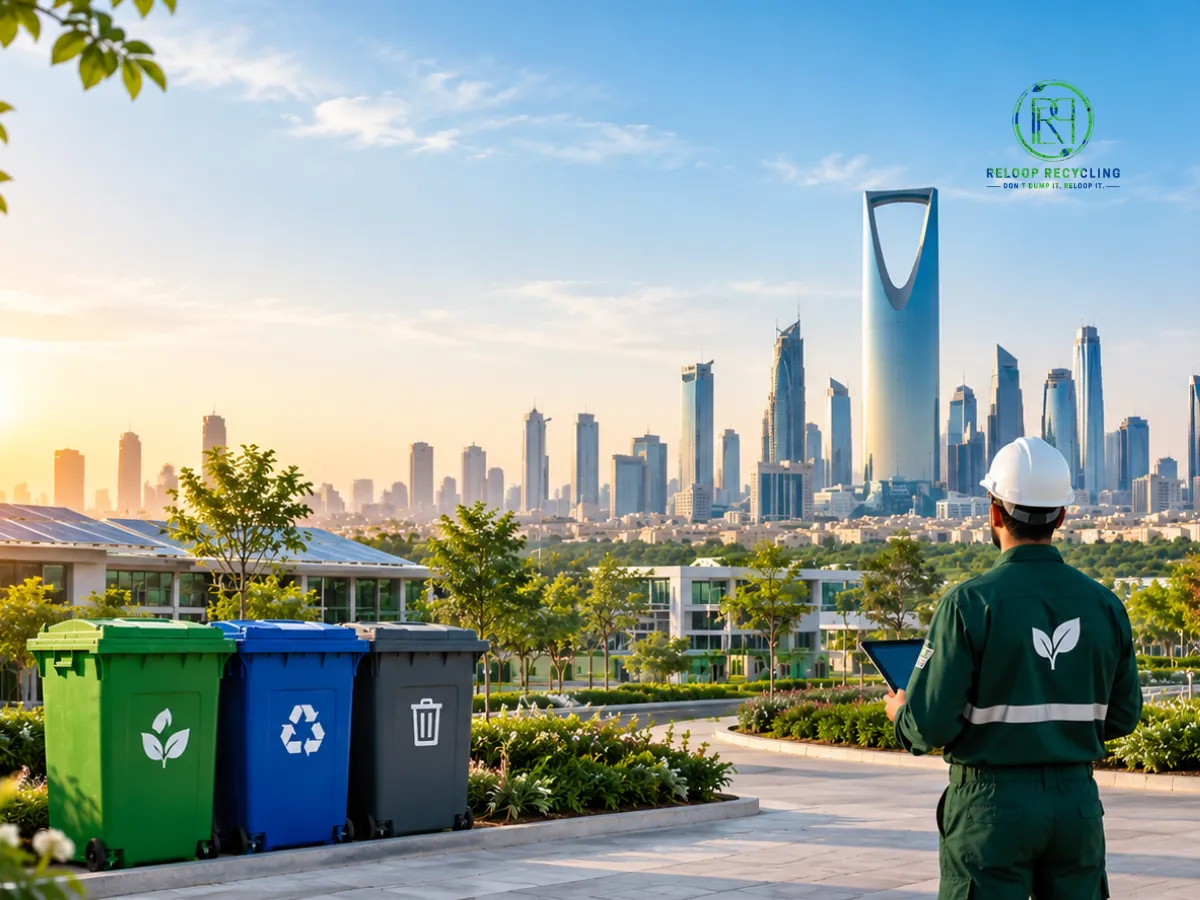
Waste management is an important component of sustainable development because every household, business, construction project, and industrial facility generates waste.
When waste is not managed effectively, recyclable materials may be lost, organic waste may be disposed of unnecessarily, and pollution risks can increase. Landfilling also consumes valuable land and can contribute to environmental impacts when waste is not appropriately managed.
A more sustainable approach focuses on preventing waste, reusing materials, recycling recoverable resources, and ensuring that remaining waste is handled responsibly.
Saudi Arabia’s national waste-sector transformation supports the broader movement toward a circular economy, in which materials are kept in productive use for as long as practical rather than being discarded after a single use.
Waste segregation at source
Separating paper, cardboard, plastics, metals, organic waste, and general waste where they are generated can improve the quality of recyclable materials and make subsequent processing more effective.
Recycling and material recovery
Recycling allows suitable materials to be processed into new products, reducing the need for virgin raw materials where recovered materials can substitute for them.
Food waste reduction
Planning purchases, improving food storage, managing portions, and identifying suitable donation or organic recovery options can help reduce the amount of food sent for disposal.
Responsible waste disposal
Waste that cannot reasonably be prevented, reused, or recovered should be managed through appropriate collection, treatment, and disposal routes that meet applicable requirements.
Monitoring and reporting
Recording waste quantities, material categories, and destinations helps organizations understand their waste generation and evaluate their progress toward sustainability goals.
These practices can help reduce environmental pressures while supporting the development of recycling infrastructure and resource recovery activities.
Understanding the Circular Economy
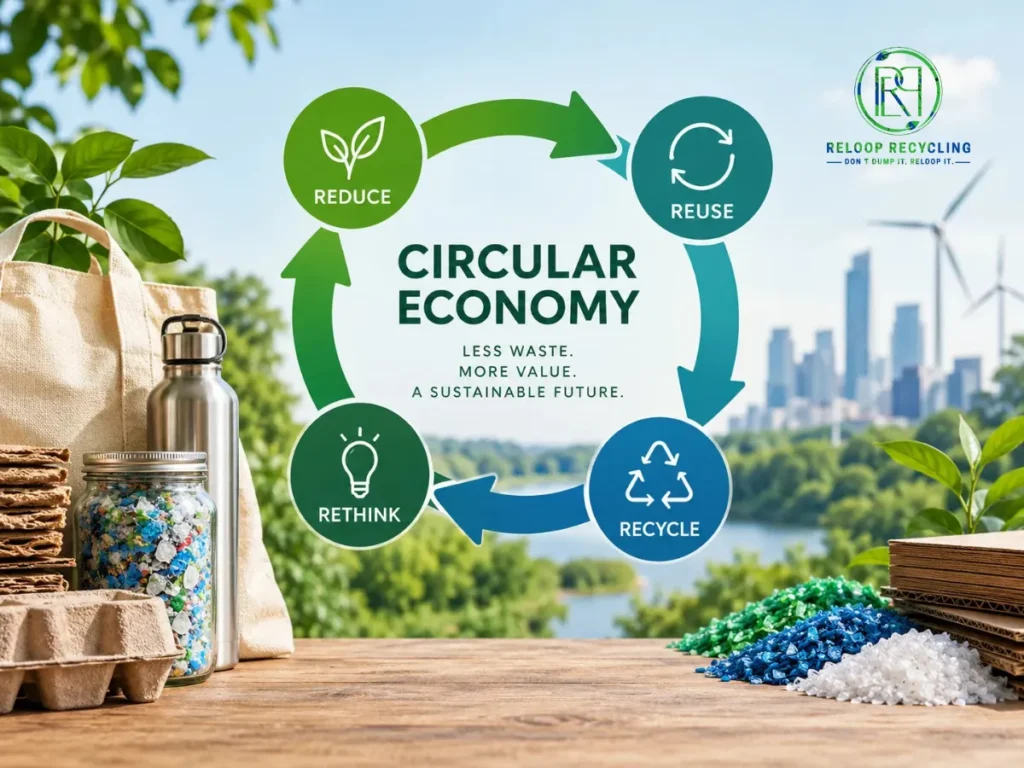
The circular economy is an approach to economic activity that aims to reduce waste and keep products and materials in use for as long as possible.
In a traditional linear economy, resources are extracted, converted into products, used, and then discarded. A circular economy seeks to retain the value of those resources through prevention, reuse, repair, refurbishment, remanufacturing, and recycling.
For example, paper and cardboard can be collected for recycling, suitable equipment can be repaired instead of replaced, and reusable products can reduce the need for single-use alternatives.
The circular economy encourages organizations to consider the entire lifecycle of materials rather than focusing only on what happens when a product reaches the end of its immediate use.
Its main principles include:
- Reduce: Avoid unnecessary consumption and waste generation.
- Reuse: Extend the useful life of products and materials.
- Repair: Maintain products instead of replacing them prematurely.
- Recover: Capture useful materials from discarded products where feasible.
- Recycle: Process suitable waste materials into resources for new production.
Adopting these principles can help businesses improve resource efficiency, reduce avoidable costs, and support the development of more sustainable production and consumption systems.
What Impact Can Vision 2030 Create?
Vision 2030 has the potential to influence the Kingdom across economic, social, and environmental dimensions. Its impact depends on the implementation of initiatives, investment, participation, and measurable progress.
Environmental impact
Better waste management, resource conservation, pollution prevention, and environmental protection can contribute to cleaner surroundings and more responsible use of natural resources.
Economic impact
Economic diversification and investment in emerging sectors can create business opportunities, encourage entrepreneurship, and support employment. Recycling and resource recovery can also contribute to new economic activities.
Social impact
Improvements in public services, recreational spaces, cultural opportunities, and urban environments can support quality of life and strengthen communities.
Technological impact
Innovation and digital transformation can improve infrastructure, service delivery, environmental monitoring, and resource management.
Institutional impact
Greater emphasis on efficiency, transparency, accountability, and collaboration can help organizations measure performance and improve the delivery of services.
These outcomes are interconnected. Environmental improvements can support public well-being, resource efficiency can benefit businesses, and innovation can help make sustainability practices more effective.
How Can We Contribute to Achieving Vision 2030?
Achieving Vision 2030 is a shared responsibility involving government institutions, private businesses, communities, residents, and individuals.
Although national strategies establish direction and priorities, progress also depends on everyday actions and the consistent implementation of sustainable practices.
Individuals and households
People can contribute by reducing unnecessary consumption, separating waste where collection systems support it, conserving water and electricity, avoiding food waste, and choosing reusable products where practical.
Businesses and organizations
Organizations can review their resource consumption, introduce waste reduction measures, improve recycling practices, monitor environmental performance, and incorporate sustainability into procurement and operational decisions.
Property owners and building operators
Buildings can support sustainability through efficient maintenance, water conservation, energy management, suitable waste segregation systems, and awareness programs for occupants and service teams.
Educational institutions
Schools, universities, and training centres can promote environmental awareness, encourage research, and develop the skills needed for emerging sustainability-related industries.
Communities
Community participation in clean-up activities, recycling initiatives, environmental education, and responsible consumption can help strengthen a culture of sustainability.
Government and industry collaboration
Effective policies, suitable infrastructure, investment, clear standards, and collaboration between public and private organizations are necessary to scale sustainable practices.
The most effective contributions begin with realistic objectives, clear responsibilities, consistent implementation, and appropriate measurement of results.
Measuring Progress Toward Sustainability
Sustainability commitments become more meaningful when progress can be measured and evaluated.
Organizations can use practical indicators to identify improvements, assess performance, and determine where further action is required.
Examples include:
| Area | Possible indicator |
|---|---|
| Waste reduction | Total waste generated over a defined period |
| Recycling | Quantity and proportion of waste recycled |
| Landfill diversion | Percentage of waste verified as diverted from landfill |
| Water conservation | Water consumption compared with a baseline |
| Energy efficiency | Energy use per unit of floor area or activity |
| Food waste | Quantity of food waste prevented or recovered |
| Environmental awareness | Participation in sustainability training |
| Resource efficiency | Reduction in material consumption |
Reliable measurement requires consistent methods, appropriate records, and clearly defined reporting boundaries. For example, material collected for recycling should not automatically be treated as successfully recycled without suitable supporting evidence.
Tracking performance over time allows organizations to establish achievable targets, identify operational gaps, and improve their sustainability initiatives.
The Role of Innovation and Collaboration
The challenges associated with sustainability cannot be addressed by a single sector acting independently. Progress requires collaboration among policymakers, researchers, technology providers, businesses, investors, and communities.
Innovation can improve the way waste is collected, sorted, processed, and recovered. Digital monitoring systems can support better resource tracking, while improved infrastructure can expand access to recycling and treatment facilities.
Research and investment can also help develop alternative materials, improve product design, and identify more efficient ways to manage water, energy, and other resources.
Collaboration is especially important because the effectiveness of sustainable practices depends on the availability of infrastructure, the quality of implementation, and participation throughout the value chain.
By sharing knowledge, adopting appropriate technologies, and evaluating results, organizations can help transform sustainability objectives into practical and scalable solutions.
Looking Ahead: A Sustainable Future for Saudi Arabia
Saudi Vision 2030 provides a long-term framework for building a diversified economy, improving quality of life, strengthening institutions, and protecting the Kingdom’s natural resources.
Its success depends on turning national ambitions into practical outcomes across industries, communities, and everyday activities.
Environmental sustainability, waste reduction, resource efficiency, and circular economy practices are important parts of this journey. They encourage a shift from short-term consumption toward more responsible decisions that consider the long-term value of resources.
As Saudi Arabia continues to develop its cities, industries, and infrastructure, sustainable practices can help ensure that progress is supported by environmental responsibility and efficient resource use.
Every stakeholder has a role to play. Governments can establish policies and infrastructure, businesses can improve operational practices, communities can adopt responsible habits, and individuals can make informed choices.
The journey toward 2030 is therefore not only about achieving national milestones. It is also about creating lasting improvements that support future generations.
Conclusion
Saudi Vision 2030 represents a comprehensive ambition to build a vibrant society, a thriving economy, and an ambitious nation.
By encouraging diversification, innovation, environmental protection, and responsible resource management, it provides a framework for sustainable development across the Kingdom.
Waste management and the circular economy demonstrate how these ambitions can be translated into practical action. Reducing waste, recovering valuable materials, conserving resources, and measuring environmental performance can all contribute to more responsible patterns of development.
Ultimately, achieving a sustainable future requires commitment, collaboration, and continuous improvement. Through informed decisions and consistent action, government entities, businesses, communities, and individuals can contribute to a Kingdom that is more prosperous, resource-efficient, and environmentally responsible.
Vision 2030 is a shared journey toward a better future — one built on opportunity, responsibility, innovation, and sustainability.

Raju Lajwani
 Connect on LinkedIn