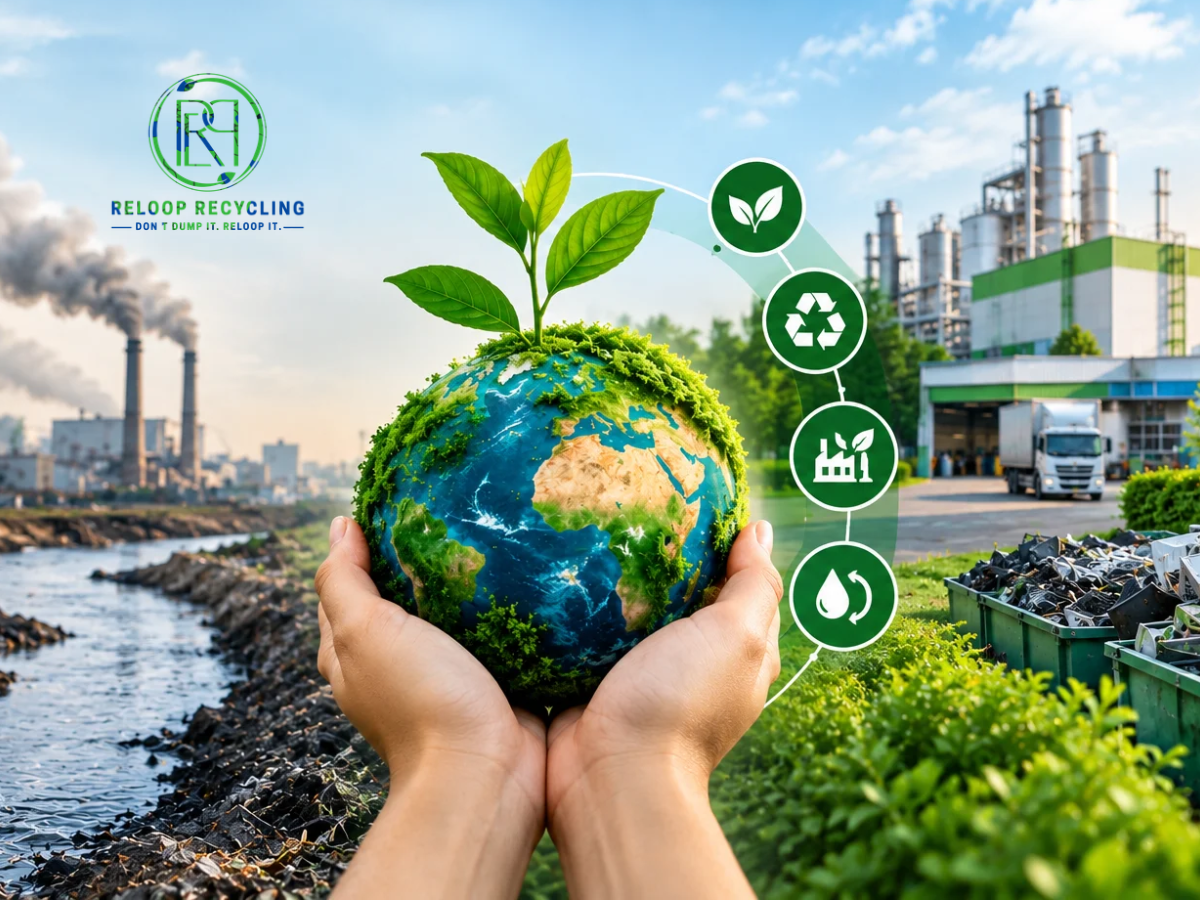
Industrial waste management is essential for protecting the environment, conserving natural resources, and safeguarding human health. Every industry generates waste through manufacturing, packaging, transportation, product use, and disposal. If this waste is not managed responsibly, it can pollute air, water, and soil, damage ecosystems, and create long-term risks for communities.
From discarded electronic devices and plastic packaging to textile waste, metal scraps, batteries, and chemical residues, industrial waste takes many forms. Each type requires a suitable approach to waste reduction, recovery, recycling, treatment, and disposal.
For industry leaders, environmental responsibility goes beyond meeting production targets and generating profits. It also means preventing pollution, reducing waste at its source, and ensuring that business activities do not create unnecessary harm to people or the planet.
This is where industrial waste management, sustainable manufacturing, and corporate social responsibility (CSR) play an important role.
Read more – Circular Economy: Principles, Benefits & Business KPIs.
Why Is Industrial Waste Management Important?
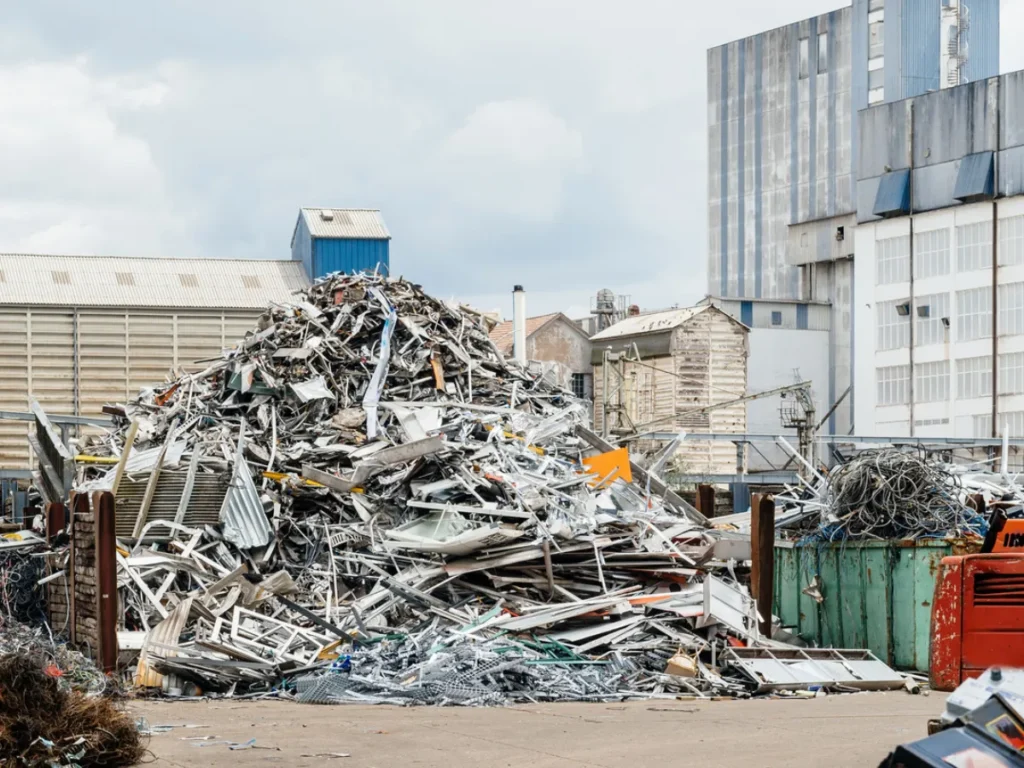
Poor waste management can have consequences that extend far beyond factory boundaries. Pollutants may enter rivers, groundwater, agricultural land, and the atmosphere. Hazardous substances can expose workers and nearby communities to health risks, while excessive resource consumption increases pressure on forests, mineral reserves, water supplies, and energy systems.
The effects are not limited to the natural environment. Communities may experience reduced access to clean water, unsafe surroundings, declining livelihoods, and increased exposure to pollution. Waste that is dumped or burned improperly can also impose economic costs through environmental restoration, healthcare needs, and lost resources.
Effective industrial waste management helps businesses:
- Prevent environmental pollution and reduce risks to human health.
- Conserve raw materials, water, and energy.
- Reduce waste disposal costs and improve operational efficiency.
- Recover valuable materials through reuse and recycling.
- Strengthen supply-chain resilience and environmental accountability.
- Meet applicable environmental laws, permits, and regulatory requirements.
- Build trust with employees, customers, suppliers, and local communities.
Responsible waste management should therefore be treated as a core business function, not simply a disposal activity or a public relations initiative.
Read more Reverse Chain in E-Waste – How the Reverse Supply Chain Works.
Understanding Different Types of Industrial Waste
Different industries generate different waste streams. Their environmental impacts depend on the materials involved, the quantities produced, how waste is handled, and the conditions in which it is released or discarded.
1. Electrical and Electronic Waste
Electrical and electronic waste, commonly known as e-waste, includes discarded computers, mobile phones, televisions, household appliances, circuit boards, cables, and industrial electronic equipment.
Electronic products may contain valuable materials such as copper, aluminium, and precious metals. They can also contain hazardous substances that pose risks when equipment is broken apart, burned, or processed without appropriate safeguards.
Environmental impact: Improper e-waste handling can contaminate soil and water, release hazardous pollutants, and expose workers to dangerous substances. It also wastes valuable resources that could otherwise be recovered.
Recommended actions:
- Establish take-back and collection programmes for end-of-life products.
- Design products for durability, repair, refurbishment, and disassembly.
- Partner with qualified e-waste recyclers and verify their practices.
- Track the collection, reuse, refurbishment, and recycling of discarded equipment.
- Reduce hazardous substances where technically and legally feasible.
2. Fast-Moving Consumer Goods (FMCG) Waste
FMCG businesses produce everyday products such as food, beverages, personal-care items, cleaning products, and household goods. Their waste streams can include plastic packaging, multilayer sachets, cartons, damaged goods, expired products, and food-processing residues.
Because many consumer products are sold in high volumes, small amounts of packaging per item can create substantial waste across the supply chain.
Environmental impact: Single-use packaging can accumulate in landfills and natural environments. Food waste also represents wasted land, water, energy, and other resources used during production and distribution.
Recommended actions:
- Reduce unnecessary packaging and material use.
- Expand reusable, refillable, and recyclable packaging where practical.
- Improve product forecasting, storage, and distribution to prevent spoilage.
- Develop packaging recovery programmes with suppliers and customers.
- Set measurable targets for packaging reduction and post-consumer recovery.
3. Textile and Fabric Waste
Textile waste comes from clothing production, fabric cutting, dyeing, finishing, retail returns, and discarded garments. It may include fabric offcuts, rejected products, unsold inventory, and used textiles.
Textile manufacturing can also generate wastewater containing dyes, finishing chemicals, and other processing residues. Synthetic fabrics may release microfibres during washing and use.
Environmental impact: Poorly managed textile waste contributes to landfill pressure, resource depletion, and potential chemical pollution. Wastewater that is not adequately treated can harm aquatic ecosystems.
Recommended actions:
- Optimise fabric cutting to reduce production offcuts.
- Reuse suitable fabric scraps and establish textile recycling partnerships.
- Treat wastewater and monitor relevant pollutants.
- Select safer chemicals and improve process efficiency.
- Promote durable products, repair, resale, reuse, and garment take-back programmes.
4. Metal Waste
Metal waste includes steel and aluminium scraps, machining residues, metal-bearing dust, slag, and discarded metal components. Some metal waste can be recovered and recycled into new products.
Environmental impact: Improper storage or disposal of certain metal-bearing residues can contaminate soil and water. Uncontrolled industrial emissions and wasteful production also increase resource consumption and pollution.
Recommended actions:
- Separate metal scrap by type to improve recovery.
- Return suitable production scrap to manufacturing processes.
- Control dust and emissions from industrial operations.
- Prevent oil, coolant, and chemical spills.
- Test and classify residues before determining their treatment or disposal route.
5. Plastic Waste
Plastic waste is generated through packaging, manufacturing rejects, product components, damaged goods, and discarded consumer products. Some plastics are relatively straightforward to recycle, while mixed materials and contaminated plastics can be more difficult to recover.
Environmental impact: Plastic waste can persist in the environment, harm wildlife, fragment into microplastics, and obstruct waterways. Poor handling of plastic pellets and production scraps can also contribute to pollution.
Recommended actions:
- Reduce unnecessary single-use plastic.
- Design packaging and products to improve reuse and recyclability.
- Prevent the loss of plastic pellets, flakes, and production residues.
- Increase recycled content where suitable and safe.
- Support effective collection, sorting, and recycling systems.
- Evaluate alternatives based on their full environmental impact rather than assuming every substitute is automatically better.
6. Paper and Cardboard Waste
Paper and cardboard waste arises from packaging, offices, printing, product distribution, and paper manufacturing. It includes cartons, boxes, paper offcuts, and production residues.
Environmental impact: Excessive paper consumption increases demand for raw materials, water, and energy. Poorly managed paper waste occupies landfill space and can contribute to methane emissions when biodegradable material decomposes without sufficient oxygen.
Recommended actions:
- Reduce unnecessary printing and packaging.
- Reuse boxes and other suitable packaging materials.
- Separate clean paper and cardboard for recycling.
- Use responsibly sourced or recycled fibres where appropriate.
- Improve water and energy efficiency in paper production.
- Manage pulp sludge and wastewater according to their composition and applicable requirements.
7. Glass Waste
Glass waste includes bottles, jars, broken glass, manufacturing rejects, and glass packaging. Suitable glass can often be recovered and used as a raw material in new glass production.
Environmental impact: Discarded glass can create physical hazards and increase landfill volumes. Producing new glass also requires energy and raw materials.
Recommended actions:
- Establish bottle-return and reusable-container systems where feasible.
- Separate glass by type and colour when required by recycling processes.
- Recover suitable glass for remanufacturing.
- Improve furnace energy efficiency.
- Provide safe collection and handling procedures for broken glass.
8. Wood Waste
Wood waste includes sawdust, shavings, offcuts, pallets, damaged furniture, and residues from construction, furniture production, and packaging.
Environmental impact: Poorly managed wood waste consumes landfill capacity and wastes usable materials. Burning treated or contaminated wood under unsuitable conditions can release harmful pollutants.
Recommended actions:
- Improve cutting plans to reduce offcuts.
- Repair and reuse pallets, furniture, and timber products.
- Recover clean wood for suitable reuse or recycling.
- Verify the source of timber and support responsible sourcing.
- Keep painted, treated, or contaminated wood separate when required for safe management.
9. Aerosol Waste
Aerosol waste includes discarded pressurised cans used for paints, cleaning products, personal-care products, lubricants, and industrial chemicals. Depending on their contents and condition, these containers may retain pressure, flammable propellants, or chemical residues.
Environmental impact: Improper handling can cause fires, explosions, worker injuries, and the release of volatile organic compounds or other pollutants.
Recommended actions:
- Choose safer formulations and lower-emission alternatives where feasible.
- Avoid unnecessary aerosol use in industrial processes.
- Store and transport discarded cans according to applicable safety requirements.
- Use appropriate collection and treatment facilities.
- Train workers not to puncture, crush, or incinerate pressurised cans unless a specifically approved process and equipment are used.
10. Battery Waste
Battery waste includes lithium-ion, lead-acid, nickel-based, and alkaline batteries from electronics, vehicles, industrial equipment, and energy-storage systems.
Environmental impact: Damaged or improperly discarded batteries can release hazardous substances. Some battery types also pose serious fire risks, particularly when crushed, short-circuited, or handled incorrectly.
Recommended actions:
- Establish dedicated battery collection and take-back programmes.
- Store and transport batteries according to their chemistry and condition.
- Train workers to identify damaged batteries and respond to fire risks.
- Partner with qualified battery recyclers and recovery facilities.
- Design products for battery replacement and safe disassembly where possible.
- Track battery waste from collection through final treatment or recycling.
What Responsibilities Do Industry Leaders Have Under CSR?
Corporate social responsibility means considering the environmental and social consequences of business decisions. In waste management, this requires companies to reduce the harm associated with their products, manufacturing processes, packaging, and supply chains.
However, CSR should not be used as a substitute for legal compliance. Businesses must meet applicable environmental laws, permits, waste-handling rules, and pollution-control requirements whether or not they have a formal CSR programme.
Industry leaders should focus on the following responsibilities.
1. Prevent Waste at the Source
Preventing waste is generally preferable to managing it after it has been created. Businesses should review product design, procurement, manufacturing, packaging, and distribution to identify avoidable material use and waste generation.
2. Protect Workers and Communities
Companies should identify waste-related health and safety risks, provide suitable protective equipment and training, prevent uncontrolled releases, and establish procedures for spills, fires, and other incidents.
3. Invest in Responsible Waste Recovery
Businesses should prioritise reuse, repair, refurbishment, and recycling where technically and environmentally appropriate. Hazardous and residual waste must be treated or disposed of safely through suitable, authorised facilities where required.
4. Work With Suppliers and Customers
A company’s environmental footprint extends beyond its own facilities. Industry leaders should work with suppliers to reduce packaging and material waste, help customers return products at the end of their useful lives, and collaborate with qualified waste-management partners.
5. Set Measurable Environmental Targets
Companies should establish realistic targets for reducing waste, increasing reuse and recycling, controlling pollution, and improving resource efficiency. Targets should be supported by reliable data, clear accountability, and regular progress reviews.
6. Report Results Transparently
Environmental reporting should explain what has improved, what remains unresolved, and how results are measured. Companies should avoid unsupported claims such as “zero waste” or “fully sustainable” unless the scope, evidence, and limitations are clearly established.
A Practical Framework for Sustainable Waste Management
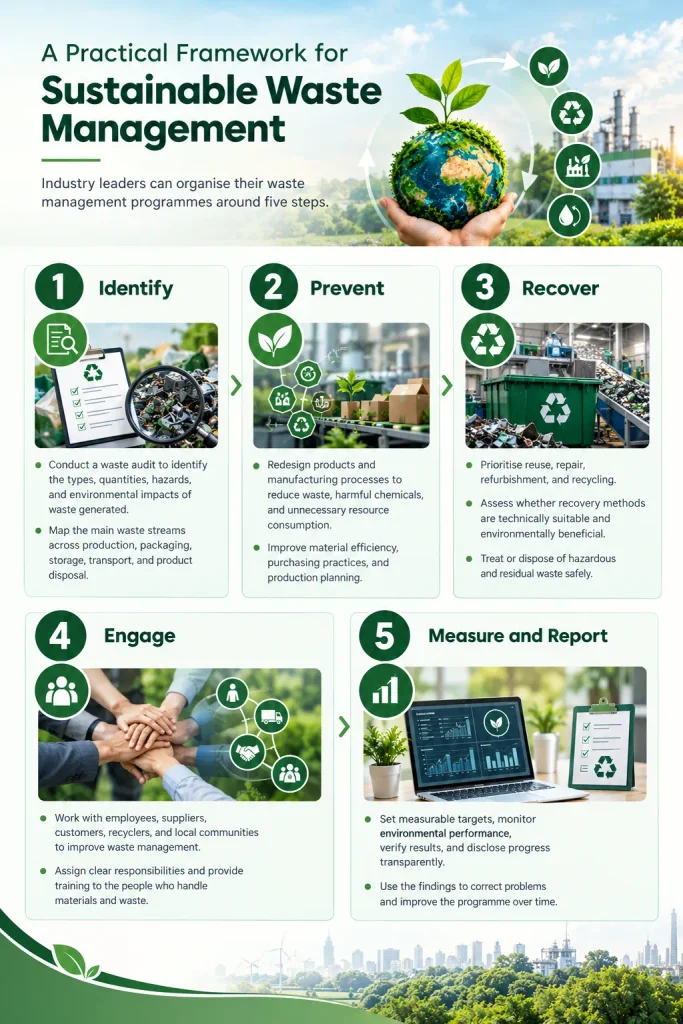
Industry leaders can organise their waste management programmes around five steps.
Step 1 — Identify
Conduct a waste audit to identify the types, quantities, hazards, and environmental impacts of waste generated. Map the main waste streams across production, packaging, storage, transport, and product disposal.
Step 2 — Prevent
Redesign products and manufacturing processes to reduce waste, harmful chemicals, and unnecessary resource consumption. Improve material efficiency, purchasing practices, and production planning.
Step 3 — Recover
Prioritise reuse, repair, refurbishment, and recycling. Assess whether recovery methods are technically suitable and environmentally beneficial. Treat or dispose of hazardous and residual waste safely.
Step 4 — Engage
Work with employees, suppliers, customers, recyclers, and local communities to improve waste management. Assign clear responsibilities and provide training to the people who handle materials and waste.
Step 5 — Measure and Report
Set measurable targets, monitor environmental performance, verify results, and disclose progress transparently. Use the findings to correct problems and improve the programme over time.
How Should Leaders Prioritise Their CSR Investments?
Not all waste streams present the same level of risk. Industry leaders should prioritise the most serious threats to human health, environmental sustainability, and community well-being. CSR investments should focus on areas where intervention can deliver the greatest measurable impact, such as hazardous waste management, plastic pollution reduction, wastewater treatment, and responsible disposal practices.
Organisations should adopt a risk-based approach that considers the severity of environmental damage, the scale of affected communities, regulatory compliance requirements, and the long-term sustainability of proposed solutions. Investing in waste segregation, recycling infrastructure, circular economy initiatives, and community awareness programmes can help businesses address immediate concerns while building lasting environmental resilience.
Ultimately, effective CSR is not about spreading resources across numerous initiatives; it is about directing investments towards the most pressing challenges, measuring outcomes transparently, and ensuring that every initiative contributes meaningfully to sustainable development.
How can industries prevent environmental damage?
Industries can prevent environmental damage by adopting sustainable manufacturing practices, reducing waste generation, controlling air and water pollution, conserving natural resources, and ensuring the safe disposal of hazardous materials. Regular environmental audits and compliance with pollution control regulations also help minimise their ecological footprint.
What are the most effective ways to reduce industrial pollution?
The most effective strategies include installing pollution control equipment, treating industrial wastewater, using cleaner production technologies, improving energy efficiency, switching to renewable energy, and implementing effective waste management systems. These measures help reduce harmful emissions and protect surrounding ecosystems.
How can industries reduce their carbon footprint?
Industries can reduce their carbon footprint by improving energy efficiency, adopting renewable energy sources, optimising transportation and logistics, minimising production waste, and investing in low-carbon technologies. Monitoring greenhouse gas emissions also helps organisations identify areas for improvement.
What role does CSR play in preventing environmental damage?
Corporate Social Responsibility (CSR) enables industries to invest in environmental conservation, waste reduction, water management, renewable energy, and community awareness programmes. Well-planned CSR initiatives can support local environmental restoration and promote long-term sustainable development.
What are the benefits of adopting sustainable industrial practices?
Sustainable industrial practices can reduce operating costs, conserve resources, improve regulatory compliance, strengthen brand reputation, and protect employee and community health. They also help businesses manage environmental risks and build long-term resilience.

Raju Lajwani
 Connect on LinkedIn