When a company retires its old IT equipment, the first thought is usually about the hardware — what to replace, where to store it, or how to recover some value from it. However, the biggest risk is rarely the physical equipment itself. The real concern is the information that remains stored inside those devices.
Servers, laptops, hard drives, SSDs, networking equipment, and storage systems can hold years of valuable business data. This may include customer information, employee records, financial documents, intellectual property, operational files, passwords, and confidential business strategies. Even when a device is no longer connected to a company network, the data stored on it may still be accessible if it is not properly removed.
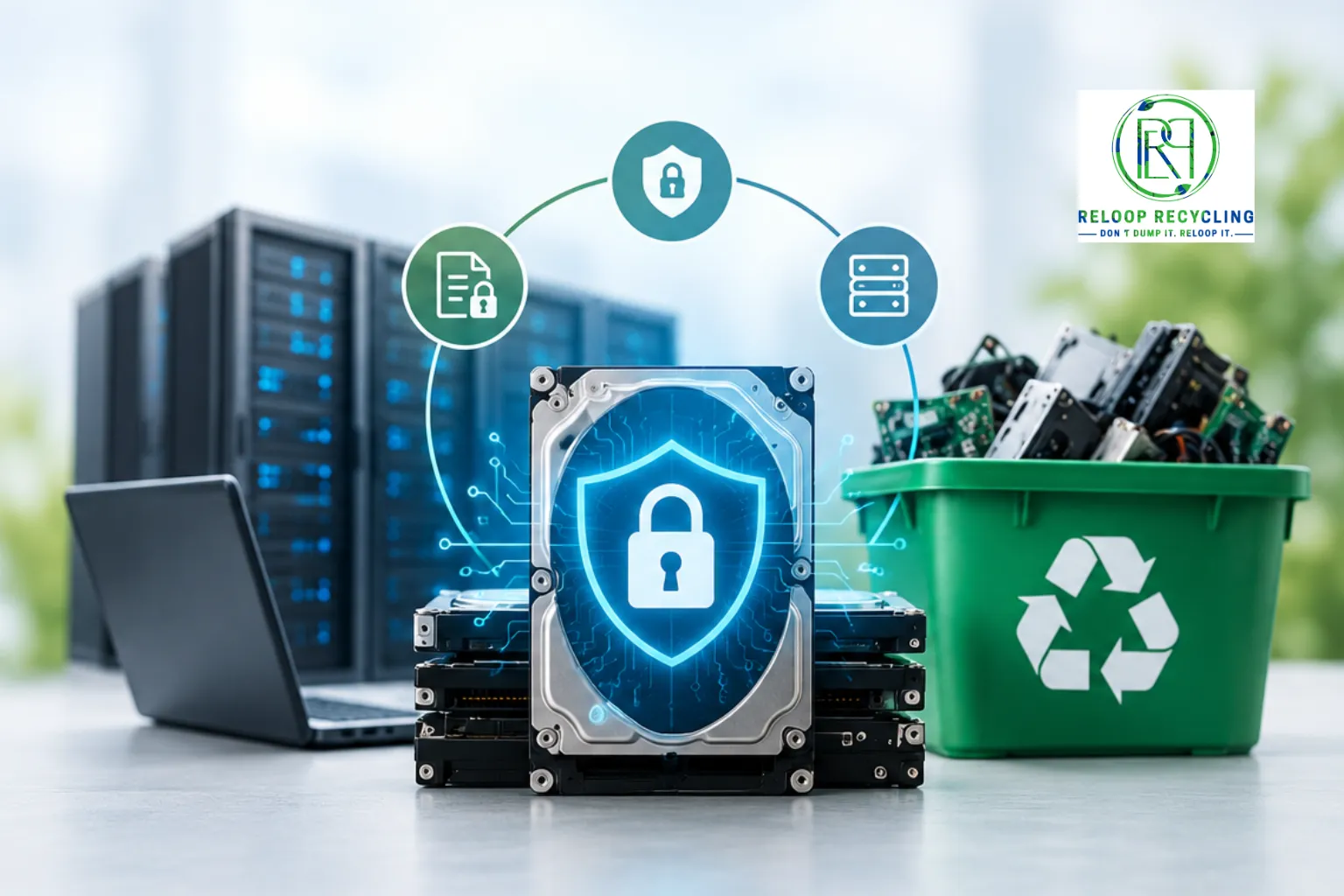
This is why data security has become one of the most important parts of IT recycling and data center decommissioning. A secure retirement process is not only about disposing of old technology responsibly. It is about ensuring sensitive information does not fall into the wrong hands.
Businesses that overlook data protection during hardware disposal can face serious consequences, including cybersecurity incidents, compliance violations, financial losses, and damage to their reputation.
Safely destroy sensitive data before your IT assets are reused, recycled, or disposed of. Reloop provides secure, documented data destruction you can trust.
Get in touch with Reloop today.
Hidden Data Risks Inside Retired IT Equipment
Many organizations assume that once a computer is formatted, a server is reset, or files are deleted, the information stored on those devices is gone forever. Unfortunately, this assumption can create major security vulnerabilities.
Deleting a file does not always remove the actual data from a storage device. In many cases, the operating system only removes the reference that points to that file, while the original information remains available until it is overwritten.
With modern data recovery tools, previously deleted information can sometimes be restored.
Data Types that Stores in Devices:-
- Customer databases
- Saved passwords
- Business emails
- Employee documents
- Financial reports
- Software configurations
- Internal project files
If that device is sold, recycled, or reused without proper data sanitization, sensitive information could become available to unauthorized individuals.
This is why professional IT asset management companies follow strict data destruction procedures before any equipment leaves an organization’s control.
Data Leakage During IT Recycling: A Major Security Concern
IT recycling helps businesses reduce electronic waste and recover value from retired technology. However, the recycling process involves multiple stages, including collection, transportation, processing, refurbishment, resale, and disposal.
Every stage creates a potential security risk if proper controls are missing.
Protecting Sensitive Information After Equipment Retirement
One of the biggest mistakes companies make is treating retired hardware as useless equipment. In reality, old technology often contains valuable business information.
A decommissioned server may contain:-
- Customer transaction records,
- Application databases,
- Backup files,
- Network configurations,
- User credentials,
- Business analytics data.
Even a single storage device that is not properly wiped can expose an organization to significant security problems.
A professional IT recycling process ensures every storage component is identified, tracked, and securely processed before reuse or disposal.
Compliance Requirements Make Data Security Essential
Data security is not only a cybersecurity concern — it is also a compliance requirement.
Organizations across industries are responsible for protecting sensitive information throughout the entire data lifecycle, including when technology assets are retired.
Industries such as:-
- Healthcare,
- Banking and financial services,
- Government organizations,
- Legal companies,
- Education institutions.
often manage highly confidential information and operate under strict data protection requirements.
If data is not properly destroyed before recycling, it can lead to:-
- Regulatory penalties,
- Legal disputes,
- Failed compliance audits,
- Loss of customer confidence,
- Brand reputation damage.
A documented IT asset disposition process helps businesses prove that their retired equipment was handled securely and responsibly.
Why Data Center Decommissioning Requires Extra Security
Data center decommissioning is far more complex than replacing office computers.
A modern data center contains thousands of interconnected assets, including:
- Enterprise servers,
- Storage arrays,
- Network switches,
- Backup systems,
- Rack equipment,
- Database infrastructure,
- Physical storage devices.
These systems may contain years of critical business information.
During a data center shutdown, organizations must carefully manage every step — from identifying equipment to securely removing data and transporting assets.
Without proper planning, businesses may accidentally leave behind storage devices containing sensitive information.
A successful decommissioning process requires a combination of technical expertise, security procedures, asset tracking, and compliance documentation.
Important Steps for Secure Data Center Decommissioning
1. Complete Asset Identification and Inventory Management
Before removing any equipment, businesses need a complete understanding of what assets exist within the facility.
This includes identifying:
- Servers,
- Storage devices,
- Hard drives,
- Networking equipment,
- Backup media,
- Rack components.
A detailed inventory prevents important assets from being missed during the decommissioning process.
It also helps organizations determine which equipment can be reused, remarketed, refurbished, or recycled.
Without proper asset tracking, companies may lose visibility over valuable technology and create unnecessary security risks.
2. Secure Data Sanitization Before Asset Disposal
Data sanitization is one of the most important stages of IT recycling and decommissioning.
The goal is to permanently remove sensitive information so that it cannot be recovered.
Depending on the situation, organizations may use different methods:
Data Erasure
Professional data wiping software overwrites existing information multiple times, making previous data practically impossible to recover.
This method is commonly used for equipment that can be reused or resold.
Cryptographic Erasure
For encrypted storage devices, destroying encryption keys can make the stored information inaccessible.
This method is often used in modern enterprise environments.
Physical Data Destruction
When devices cannot be reused or security requirements demand complete destruction, physical methods may be used.
This can include shredding or destroying storage media so that recovery is impossible.
The right method depends on the sensitivity of the information and the organization’s security requirements.
3. Maintaining a Proper Chain of Custody
One often overlooked aspect of IT recycling is knowing exactly where equipment goes after leaving the company premises.
A secure chain-of-custody process tracks every movement of retired assets.
This includes:
- Asset pickup records
- Transportation details
- Processing locations
- Data destruction confirmation
- Final recycling or resale details
A documented chain of custody provides accountability and reduces the risk of unauthorized access during transportation and processing.
For businesses handling sensitive information, this documentation is essential.
4. Receiving Data Destruction Certificates and Reports
After completing data sanitization, businesses should receive proper documentation confirming that the process was completed successfully.
Important records may include:
- Data destruction certificates,
- Asset inventory reports,
- Recycling certificates,
- Remarketing reports,
- Environmental compliance documents.
These records help organizations demonstrate responsible IT asset management during audits and compliance reviews.
The Role of Professional IT Asset Remarketing Providers
Managing IT recycling and data security internally can be challenging, especially for large organizations with multiple locations and thousands of devices.
Professional Global IT Asset Remarketing providers help businesses manage the complete lifecycle of retired technology.
Global IT Asset Remarketing company’s services typically include:
- Asset collection and transportation
- Data destruction and sanitization
- Equipment testing and grading
- Refurbishment
- Resale management
- Responsible recycling
The advantage of working with experienced providers is that businesses can protect sensitive information while also recovering maximum value from their retired equipment.
Balancing Data Security With Asset Recovery
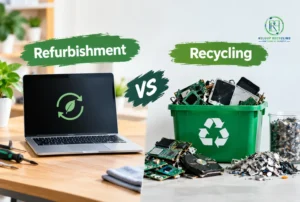
Some companies believe the safest option is to destroy every retired device. While physical destruction is sometimes necessary, it is not always the best solution.
Many IT assets still have significant value after proper data removal.
For example:
- Servers can be refurbished,
- Storage equipment can be reused,
- Networking hardware can be resold,
- Business laptops can support secondary markets.
A secure IT asset remarketing approach focuses on protecting information first while recovering value wherever possible.
The objective is simple:
Protect the data. Recover the value. Reduce electronic waste.
This approach supports both cybersecurity and sustainability goals.
Environmental Benefits of Responsible IT Recycling
Data security and environmental responsibility often go hand in hand.
Improper disposal of electronic equipment contributes to electronic waste and environmental damage. Professional IT recycling ensures that unusable components are processed according to responsible recycling standards.
Organizations can reduce their environmental impact by:
- Extending hardware life through refurbishment
- Reusing valuable components
- Recycling electronic materials properly
- Reducing unnecessary landfill waste
Secure IT asset remarketing creates a circular approach where technology continues to provide value beyond its first lifecycle.
Final Thoughts
Data security should be a priority from the moment IT equipment is retired until its final destination is reached.
Old technology is not simply outdated hardware. It can contain valuable and confidential business information that requires careful protection.
Without proper IT recycling and data center decommissioning procedures, organizations may expose themselves to unnecessary cybersecurity threats, compliance issues, and financial risks.
A professional Global IT Asset Remarketing strategy provides a secure way to manage retired technology through certified data destruction, asset recovery, and responsible recycling.
By taking a security-first approach, businesses can protect their information, maintain compliance, recover value from retired assets, and build a more sustainable technology lifecycle.