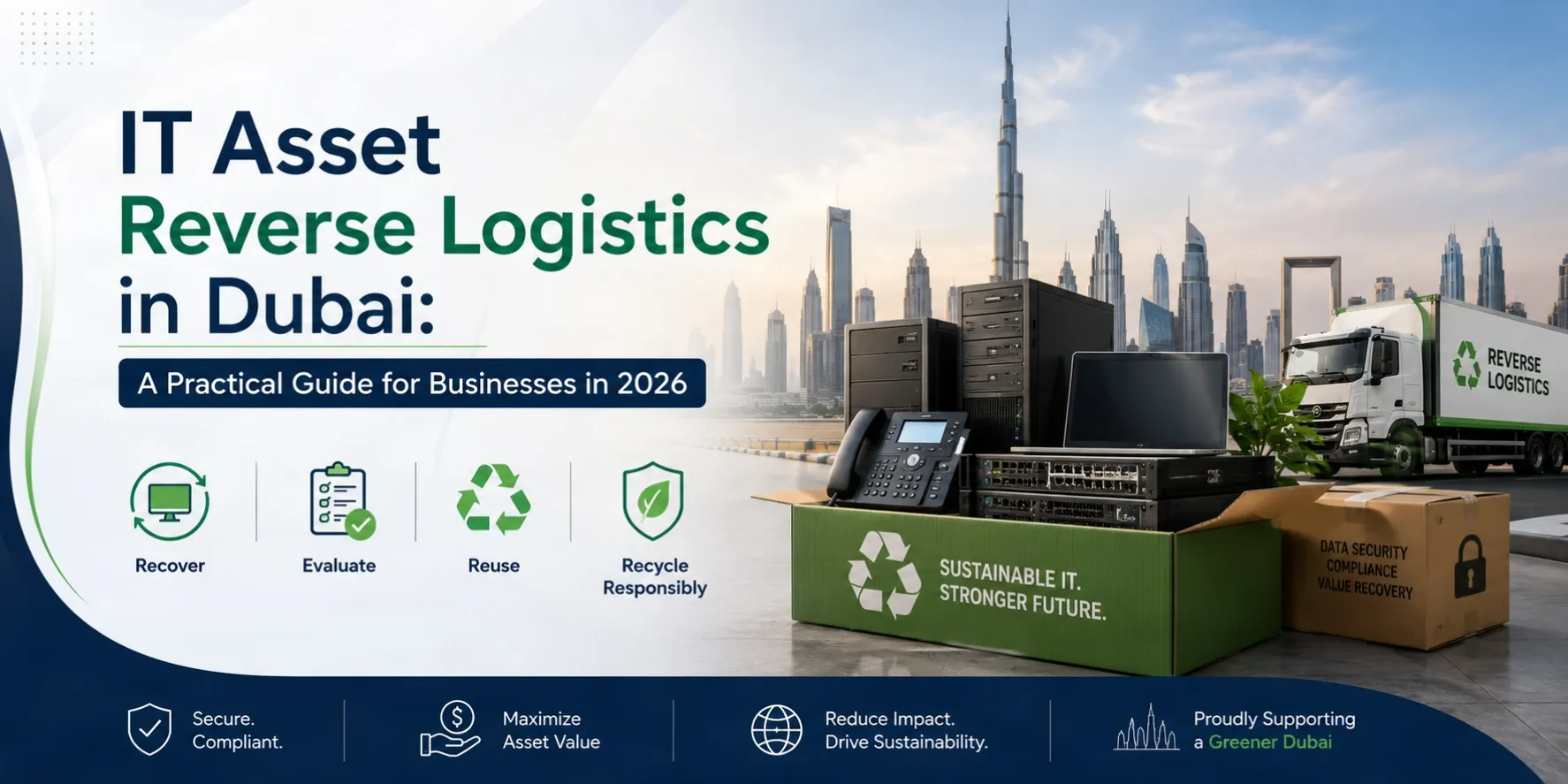
In Dubai, technology upgrades happen fast. A company may replace hundreds of laptops after a cloud migration project, upgrade servers because of cybersecurity requirements, or clear out an entire office during relocation. What usually gets less attention is what happens to the old equipment afterward.
Most businesses do not think much about retired IT assets until storage rooms begin filling up with unused systems or an audit team asks where old hard drives ended up. By that point, the issue is no longer only operational. It becomes a question of data security, compliance, and responsibility.
Over the past few years, reverse logistics has quietly become an important part of enterprise IT management across the UAE.Businesses are no longer just discarding old devices. They want to recover value, reduce risk, and ensure secure disposal of sensitive data.
What Is IT Asset Reverse Logistics in Dubai?
IT asset reverse logistics is the process of collecting, tracking, and safely handling old or unused IT equipment. Instead of simply throwing devices away, businesses recover usable value and securely destroy data before recycling or disposal.
| Common Assets | Typical Process |
| Laptops | Collection & tracking |
| Servers | Data destruction |
| Mobile phones | Refurbishment |
| Networking devices | Recycling & reporting |
The biggest concern is not the hardware itself, but the sensitive data stored inside it.
Why Dubai Companies Are Investing in Secure IT Asset Disposal
A few years ago, many companies simply stored old IT equipment or sold it without proper records. Today, that is risky. Businesses now face stricter cybersecurity, compliance, and sustainability requirements, while electronic waste continues to grow due to faster technology upgrades.
Even an old laptop can still contain emails, passwords, financial files, or customer data. Simply formatting a device is often not enough, because data may still be recoverable if it was not securely erased. This is why companies in sectors such as banking, healthcare, education, logistics, and government have started approaching IT disposal more carefully. The concern is no longer only about clearing storage space. It is about maintaining accountability over where company data goes once equipment leaves the office.
Hidden Risks in IT Equipment Disposal and Transportation
One of the biggest misconceptions around IT disposal is that risk ends once devices are handed over to a vendor. In reality, the most sensitive stage is often what happens during transportation and handling.
Without proper tracking, businesses may not know:
- whether all devices reached the processing facility,
- whether hard drives were removed before transport,
- or whether the final destruction process actually took place.
This is why professional reverse logistics providers focus heavily on chain-of-custody procedures. Every asset is usually logged, tracked, and documented throughout the process. That level of control is especially important for organizations handling confidential or regulated information.
In practical terms, a mature reverse logistics process feels less like waste collection and more like secure asset management.
What Happens to Old IT Equipment After Collection?
Not every retired device goes directly into recycling.
Once equipment is collected, it is typically inspected and categorized. Some systems can still be refurbished and reused. Others may have recoverable components, while older or damaged equipment is dismantled for material recovery and recycling.
This part is often overlooked by businesses. Many organizations assume obsolete equipment has no remaining value, but enterprise hardware can still retain resale or refurbishment potential depending on age and condition.
For larger companies, structured asset recovery programs sometimes offset part of the replacement cost of new infrastructure. That becomes especially relevant during large-scale upgrades involving hundreds of devices.
At the same time, equipment that cannot be reused must still be handled responsibly because electronic waste contains materials that require controlled disposal methods.
Why Data Destruction Is the Most Critical Step
When businesses talk about reverse logistics, the conversation almost always returns to data security.
The hardware itself can usually be replaced. The information stored inside it cannot.
This is why professional IT asset recovery projects place so much emphasis on certified data destruction. Depending on the type of storage device and the security requirements involved, companies may use software wiping, degaussing, shredding, or physical destruction.
For high-security sectors, onsite destruction is becoming increasingly common because organizations prefer not to transport storage devices intact.
What matters most is documentation. Businesses increasingly expect destruction certificates, serialized reports, and audit records that confirm what happened to every device collected during the project.
Without that visibility, disposal becomes difficult to verify internally.
Sustainability Is Now Part of the Discussion
Another major change in the Dubai market is the growing focus on sustainability.
- Sustainability has become a major focus for businesses in Dubai, especially for multinational companies and organizations with ESG goals.
- IT asset reverse logistics is no longer seen as simple disposal. It is now part of a company’s environmental and compliance strategy.
- Refurbishing working devices helps extend their lifecycle and reduces unnecessary electronic waste.
- Recycling unusable equipment supports responsible material recovery and sustainability targets.
- Businesses also want proper reporting and documentation to track how retired IT assets were processed.
Because of these changes, many companies are moving away from informal disposal methods and choosing structured, certified recovery programs instead.
How Dubai Businesses Choose a Reverse Logistics Partner
| What to Check | Why It Matters |
| Certifications (ISO 27001, ISO 14001 more ) | Ensures security, quality, and responsible recycling |
| Data destruction process | Protects sensitive business information |
| Logistics capability | Supports secure pickup and UAE-wide operations |
| Reporting & documentation | Helps with audits, compliance, and asset tracking |
Businesses should also ask whether the provider offers serial number tracking, destruction certificates, secure transportation, and detailed recycling reports.
Today, reverse logistics is not only about compliance. It also supports sustainability by reducing e-waste, extending device lifespan through refurbishment, and improving ESG reporting.
How Reloop Solves the Problem
Reloop Recycling helps businesses in Dubai securely manage old IT equipment through certified data destruction, IT asset recovery, secure transportation, and responsible e-waste recycling.
Instead of risking data leaks, untracked disposal, or improper recycling, businesses get a structured process with asset tracking, compliance documentation, and sustainable disposal solutions across the UAE.
Reverse Logistics Has Become a Business Function, Not Just a Service
One of the clearest changes over the last few years is how companies think about retired IT assets.
Previously, disposal was often handled at the end of a project with minimal planning. Today, many enterprises treat reverse logistics as part of operational governance.
That shift is happening because the risks are connected to several areas at once:
- cybersecurity,
- compliance,
- sustainability,
- operational accountability,
- and even financial recovery.
For businesses in Dubai, the conversation is no longer simply about removing old laptops or clearing storage rooms.
It is about maintaining control over technology assets throughout their entire lifecycle, including the moment they leave active use.
As digital infrastructure continues to expand across the UAE, that responsibility will only become more important in the years ahead.
Frequently Asked Questions
1. Why should businesses use professional IT asset reverse logistics services?
Professional reverse logistics helps businesses securely dispose of old IT equipment while reducing risks related to data breaches, compliance violations, and improper e-waste handling. It also improves asset tracking and supports sustainability goals.
2. What types of IT equipment can be securely disposed of?
Businesses can dispose of laptops, desktops, servers, hard drives, mobile phones, networking equipment, storage devices, printers, and other retired corporate electronics through structured IT asset recovery programs.
3. How do businesses verify that company data has been permanently destroyed?
Reliable IT disposal providers offer certified data destruction using methods such as software wiping or physical destruction. Businesses also receive destruction certificates, serialized reports, and audit documentation for compliance records.
4. Can businesses recover value from old IT assets?
Yes. Many retired IT assets still have refurbishment or resale value depending on their age and condition. Structured IT asset recovery programs can help businesses reduce replacement costs and maximize value recovery from unused equipment.
5. How does Reloop Recycling help businesses in Dubai?
Reloop Recycling helps businesses across Dubai and the UAE securely manage retired IT assets through certified data destruction, secure transportation, IT asset recovery, refurbishment, and responsible e-waste recycling with proper compliance documentation and reporting.

Raju Lajwani
 Connect on LinkedIn