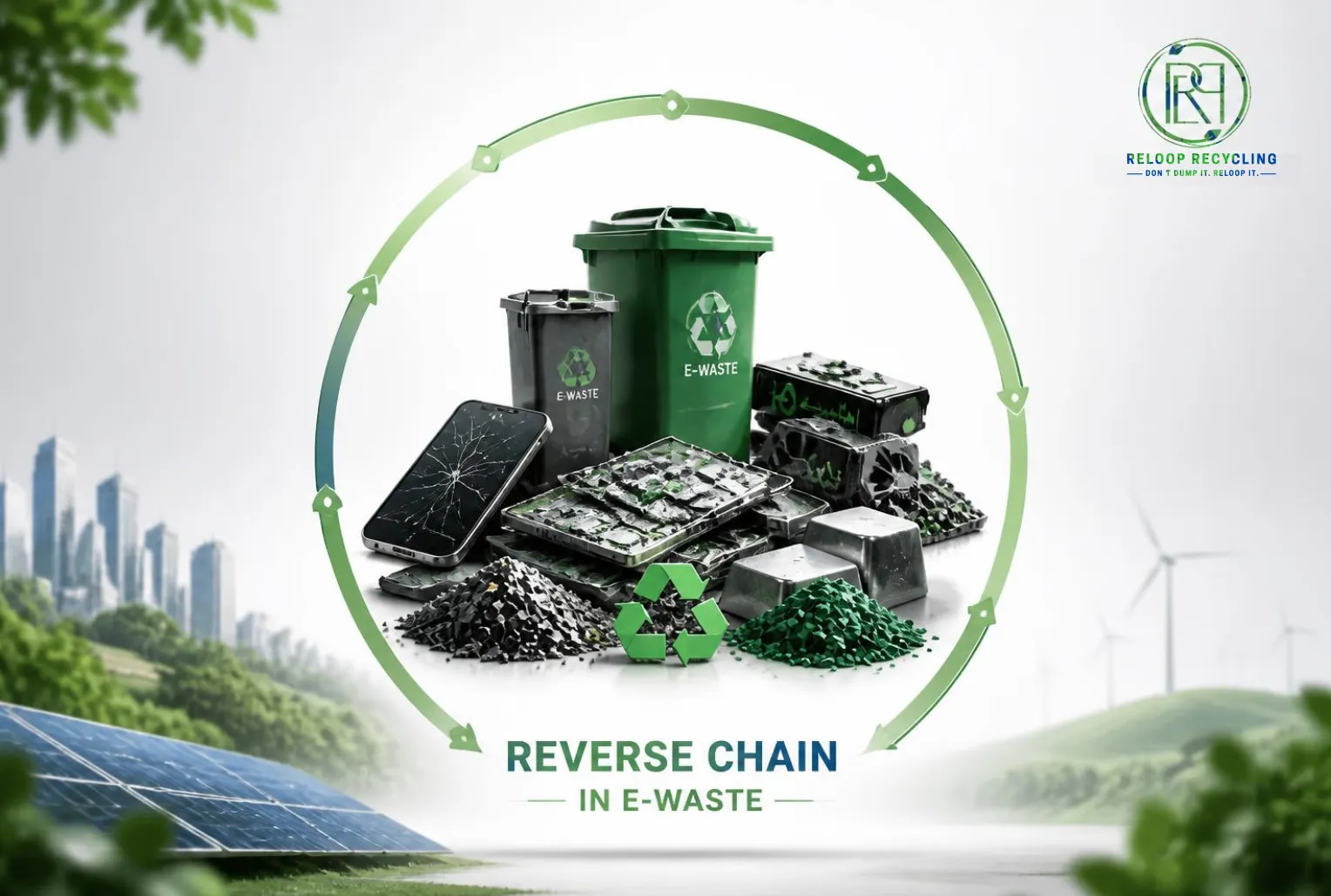
When a business buys a laptop or a server the normal supply chain begins. The product moves from the manufacturer to a distributor and then reaches the business or customer. But what happens when that product is no longer needed? The journey does not have to end with disposal. The equipment can move in the opposite direction and return to a collection point, recycler or refurbishment facility.
This process is known as a reverse supply chain. In e-waste management it is often called a reverse chain in e-waste. The main purpose is to collect old electronics and find the best next step for them. Some devices can be reused or repaired. Others can be refurbished, used for spare parts or sent for recycling.
The reverse chain helps make sure that each item reaches the right destination. This can help businesses recover value from old equipment while also supporting responsible e-waste management.
What Is a Reverse Chain in E-Waste?
A reverse chain is the process of moving used or unwanted products away from the end user. The products move back through a planned network that can include businesses, employees, collection centres, logistics providers, IT asset management companies and recycling facilities.
The network may also include refurbishment centres, parts recovery facilities and material processing facilities. The process is called “reverse” because the movement is opposite to the traditional supply chain. A normal supply chain moves products towards the customer. A reverse supply chain moves products away from the customer.
In e-waste management the goal is not simply to move waste. The goal is to recover value wherever possible. That value may come from the device itself. It may come from its components or from the raw materials inside it.
Why Is a Reverse Supply Chain Important for E-Waste?
Electronic equipment contains many useful materials. A computer can contain metals, plastics and glass. It can also contain valuable components that may still have a useful purpose. When electronics are thrown away without proper processing these resources can be lost.
There are also risks when electronic waste is handled incorrectly. Some components may require specialised treatment. Data-bearing devices can also contain sensitive business information. This means a business cannot simply hand over an old laptop and forget about it.
A business needs to know where the device goes and what happens to the data. It should also have a clear record of the asset’s final destination. A well-managed reverse chain helps address these issues and gives businesses better control over retired equipment.
The Main Stages of an E-Waste Reverse Chain
A reverse chain can look different from one business to another. However the basic process usually follows several stages. The equipment is first identified and collected. It is then transported, sorted and assessed before being sent for refurbishment, parts recovery or recycling.
1. Identifying Old Equipment
The process begins with equipment that is no longer needed. This could be a laptop that has been replaced or a server from a data centre upgrade. It could also be a printer, monitor or a batch of old mobile phones.
The first step is to identify what is being retired. Businesses should record important information about the equipment. This can include the asset number, serial number, device type, brand, model, age, condition, location and ownership status. Good records make the rest of the reverse chain easier to manage.
2. Collection
Once equipment has been identified it needs to be collected. Collection can happen in different ways. A recycling company may collect equipment directly from the business. A logistics provider may pick it up or a business may move smaller quantities to a collection facility.
For large companies the collection process can be more complex. Equipment may be spread across several offices and some businesses may have hundreds or thousands of devices. A planned collection process helps prevent assets from being lost or mixed together.
3. Transportation
The next step is transportation. Old IT equipment needs to be moved from the business location to the next point in the chain. This may be a warehouse, refurbishment centre or recycling facility.
Transportation needs to be properly managed. Equipment should be packed and handled in a way that reduces damage. This is especially important for fragile items such as monitors and laptops. For high-value equipment there may also be a need for better tracking so the business can identify what was collected and where it was sent.
4. Receiving and Sorting
Once the equipment reaches the facility it needs to be sorted. Not every device has the same value and not every device needs the same treatment. A working laptop may go into one processing stream while a damaged laptop may go into another.
A server may require a different assessment. Printers and monitors may also have their own processing requirements. Equipment can be grouped based on factors such as device type, condition, age, functionality, brand, model, data storage and reuse potential. This step helps determine what should happen next.
5. Data Destruction
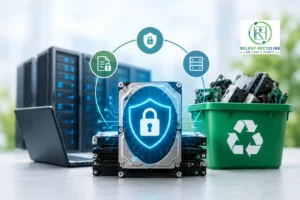
Data security is one of the most important parts of an IT reverse chain. Old devices may contain business data. A laptop can contain emails and documents while a server can contain large amounts of company information. Storage devices may also contain customer or employee information.
Simply deleting files is not always enough for business requirements. The organisation should have a suitable data sanitisation or destruction process. The method depends on the type of storage device and the organisation’s requirements.
Some equipment may be suitable for secure data erasure. Other storage media may require physical destruction. The important point is that data security should be considered before the device moves further through the chain. A reverse supply chain should not create a new data security risk.
6. Testing and Grading
After the data issue has been addressed the equipment can be tested. This is particularly important when reuse or refurbishment is possible. The device can be checked for basic functionality.
A laptop may be tested for its screen, keyboard, battery, storage and memory. The same principle applies to other types of equipment. After testing the equipment can be graded based on its condition and functionality.
For example:
Grade A: Good condition with limited work required.
Grade B: Functional but shows signs of use.
Grade C: Requires repairs or replacement parts.
Non-reusable: Not practical to repair or reuse.
The exact grading system can vary between organisations. The purpose is to make the next decision easier and identify the most suitable path for each device.
7. Refurbishment and Repair
Some equipment can be given a second life. This is where refurbishment enters the reverse chain. A device may only need a few changes to become useful again.
The battery may need replacing or the storage drive may need an upgrade. The device may also need cleaning or a faulty component may need to be replaced. After the work is complete the device can be tested again.
If it meets the required standards it may be suitable for another user. This could be within the same organisation or through an approved secondary market. Refurbishment helps keep the product in use for longer and can delay the point at which it becomes e-waste.
8. Parts Recovery
Not every device can be fully refurbished. But that does not mean every part is useless. A damaged laptop may still contain working components. A server or desktop computer may also contain parts that can be recovered.
These parts can sometimes be reused as spares. This creates another layer in the reverse supply chain. Instead of recovering only raw materials the process can recover useful components first.
Parts recovery can help preserve more value from the original equipment. It can also reduce the need to source certain replacement components when suitable recovered parts are available.
9. Material Recycling
Equipment that cannot be reused or refurbished can move into the recycling stream. The device is dismantled and different materials are separated. These can include metals, plastics, glass, circuit boards, cables and other recoverable materials.
The materials can then be sent through appropriate recycling processes. The goal is to recover useful resources and manage the remaining waste responsibly. This is the stage where an old device becomes a source of secondary raw materials.
10. Final Processing and Responsible Disposal
Not everything inside an electronic device can be recovered. Some materials may require further treatment while others may have little recovery value. These materials still need to be handled correctly.
A responsible reverse chain should therefore include an appropriate final disposal process for residual waste. The objective is to avoid simply moving unwanted material from one place to another. A proper chain should have a clear and responsible end point.
The Role of Reverse Logistics in E-Waste
Reverse logistics is the movement and management of products after they have reached the customer. It is an important part of e-waste management. A business may have equipment at several locations and each location creates a collection requirement.
The equipment then needs to be transported and tracked. It also needs to reach the correct processing facility. This creates a logistics challenge for businesses that manage large amounts of IT equipment.
Good reverse logistics can make the process more organised. It can also reduce unnecessary transport and handling. For large businesses this can be particularly important.
Reverse Chain vs Traditional Supply Chain
The two systems work in opposite directions. A traditional supply chain looks like this:
Manufacturer → Distributor → Business → User
A reverse supply chain may look like this:
User → Business Collection → Logistics → Assessment → Refurbishment or Recycling
The goals are also different. The traditional supply chain focuses on delivering products. The reverse chain focuses on recovering products and materials.
Both systems require planning, tracking and logistics. However the reverse chain often has more uncertainty because the condition of returned equipment can vary greatly. This makes sorting and assessment especially important.
What Happens to an Old Laptop in a Reverse Chain?
Consider a company replacing 500 laptops. The old laptops are first collected and each laptop is recorded. The devices are then transported to a processing facility where they are sorted and checked for damage.
Data is securely addressed before the devices move further through the process. The laptops are then divided into different groups. Some may be ready for refurbishment while others may need repairs. Some may be suitable for parts and others may be sent for material recycling.
This means 500 laptops do not necessarily have one final destination. The reverse chain determines the most suitable path for each device based on its condition, value and potential for reuse.
Why Asset Tracking Matters
Tracking is a major part of a good reverse chain. A business should know what equipment it has and what happens after collection. This becomes even more important when dealing with large numbers of devices.
Asset tracking can help answer important questions. What was collected? When was it collected? Where did it come from? What happened to the data? Was the device refurbished or recycled? Were components recovered?
Clear records provide better visibility. They also make reporting easier and help businesses maintain a clear record of their retired IT assets.
Certificates and Documentation
Documentation is another important part of the process. Businesses may need records showing that equipment was properly processed. Depending on the service and the equipment this may include collection records, asset lists, data destruction records and recycling certificates.
Other records may include processing reports, weight records and final disposition reports. The exact documentation will depend on the business and its requirements. The main goal is traceability.
A company should be able to show what happened to its retired equipment. This creates a clearer audit trail and makes it easier to manage internal reporting and compliance requirements.
Challenges in an E-Waste Reverse Chain
Reverse chains are not always simple. Businesses deal with different types of equipment and each device can have different requirements.
Different Types of Equipment
Businesses rarely retire only one type of device. A single collection may contain laptops, desktops, servers, printers and monitors. Each type can require different handling.
Different Conditions
Some equipment may work perfectly while other devices may be damaged or missing parts. This makes proper sorting and testing important.
Data Security
Data-bearing equipment requires special attention. A mistake during handling or processing can create serious security problems. Data security should therefore be built into the reverse chain from the beginning.
Transportation
E-waste can be bulky and fragile. Moving large volumes requires planning and proper handling. High-value equipment may also need additional tracking.
Lack of Asset Information
Old equipment may have incomplete records. This can make it difficult to identify devices or confirm ownership. Good asset records can make the reverse process much easier.
Storage
Businesses can accumulate old equipment when there is no clear end-of-life process. The longer equipment remains in storage the harder it can become to manage. A clear reverse chain helps prevent this backlog.
How Businesses Can Build a Better Reverse Chain
A good reverse chain starts before equipment becomes waste. Businesses can create an end-of-life plan when they purchase IT equipment. They can decide how assets will be tracked and define who is responsible for collection.
Businesses can also establish data security procedures and choose appropriate recycling and refurbishment partners. When equipment reaches the end of its useful life the process is then easier to follow.
A basic system can look like this:
Identify → Collect → Track → Secure Data → Assess → Refurbish or Recycle → Recover → Report
Each step has a purpose. Together they create a more organised process for managing retired IT equipment.
Reverse Chains and the Circular Economy
A reverse chain is closely linked to the idea of a circular economy. A traditional model is often described as:
Take → Make → Use → Dispose
A circular approach tries to keep products and materials in use for longer. The model becomes:
Make → Use → Reuse → Repair → Refurbish → Recover → Recycle
The reverse chain helps make this possible. It brings used products back into the system instead of sending them directly to disposal.
A working device can be reused. A damaged device can be repaired. A device that cannot be repaired can provide useful parts. Materials can then be recovered from what remains.
This creates several opportunities to recover value before final disposal.
Why Businesses Should Think Beyond Recycling
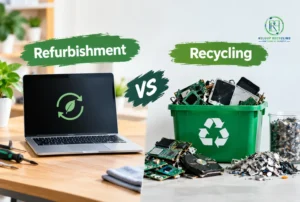
Recycling is important. But recycling should not always be the first step. If a laptop can be reused then keeping it in service may preserve more of its original value.
If it cannot be reused but can be refurbished then refurbishment may be an option. If neither is practical then parts recovery or material recycling may be suitable.
The basic idea is simple:
Keep the product in use when possible.
Recover components when practical.
Recycle materials when the product has reached the end of its useful life.
This approach can help businesses make better use of their IT assets while reducing unnecessary waste.
The Future of E-Waste Management
The volume of electronic equipment continues to grow. Businesses are also replacing technology more frequently. This makes efficient reverse chains increasingly important.
Companies need more than a collection service. They need visibility, secure data handling, proper asset assessment and responsible processing. They also need clear records.
A strong reverse chain brings these activities together. It turns the end of an asset’s first life into the start of another process.
Final Thoughts
A reverse chain in e-waste is much more than collecting old electronics. It is a complete process that starts when a business identifies equipment that is no longer needed.
The equipment is collected and transported to the right facility. It is then sorted and assessed. Data is securely addressed before the equipment is sent for refurbishment, parts recovery or recycling.
Usable devices can be refurbished. Useful components can be recovered. Materials can be recycled and residual waste can be handled through appropriate channels.
The main goal is to recover as much value as possible while keeping the process secure and traceable. For businesses this can create a more organised way to manage old IT equipment. It can also support responsible e-waste management.
The most important principle is simple: an old electronic device does not always have to become waste immediately.
With a well-planned reverse supply chain it can become a reusable device. It can become a source of spare parts or a source of recovered materials. That is what makes the reverse chain such an important part of modern e-waste management.